Loops
Bounded Loops
Agent loops and graphs that end on an independent gate, with an append-only ledger of every iteration.
CodeApache-2.0
Topic hub · Loops
In most agent frameworks a step ends when the agent says it is done. A harness should instead prove that it terminates, stays within budget, and only reports done after an independent check passes.
Start here
Your progress is saved in this browser.
Reading path · 0 of 6 read
Tools
Loops
Agent loops and graphs that end on an independent gate, with an append-only ledger of every iteration.
Orchestration
A universal substrate for agent orchestration: execution semantics for multi-agent topologies, layered model routing and a judge pipeline.
Runtime
Deterministic hooks for coding agents: effort routing, goal anchoring, convergence detection and token budgeting.
Workbench
Run Codex, Grok, Gemini, Kimi, Qwen Code, OpenCode and Claude subagents side by side inside Claude Code, and watch, steer and approve every step.
Research
The instrument found 47 vacuous gates — checks satisfied by the absence of the thing they check — in shipped, reviewed code
One substrate for agent orchestration: 12 topologies, Forge team design and three-layer model routing
Glossary
An agent loop with proved termination under a global repair budget, an enforced spend ceiling, and completion only on an independent gate verdict.
The pass or fail result of an independent check that decides whether a loop step is done, instead of the agent's own claim.
A check that looks sound but passes any input, for example a test that asserts nothing. One of two ways a gate passes anything.
When the agent being checked also produces the evidence its check relies on, so the gate only confirms what the agent said. The second way a gate passes anything.
A cost limit enforced inside an attempt, while it runs, rather than checked only between attempts.
An append-only log of loop iterations and gate verdicts where each entry carries the hash of the one before, so the history cannot be edited unnoticed.
The shape in which agents are connected and run, such as sequential, parallel, hierarchical, debate or mesh, each with defined execution semantics.
Tiers of fallback behaviour that keep a multi-agent system answering when parts of it fail: autonomous swarm, deterministic graph, single agent, then a human in the loop.
Writing
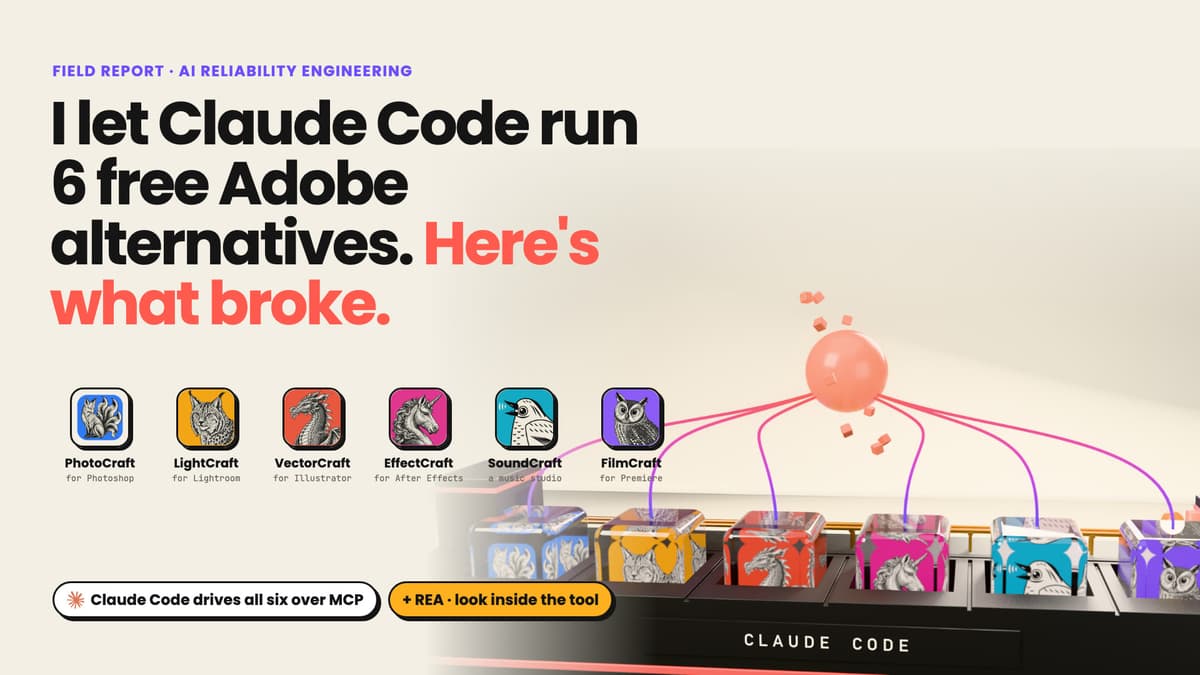
Field reports
Claude Code made a 30-second short in ArtCraft's six free, open-source editors over MCP: 0 ArtCraft credits, about 3 minutes cold. App by app, what worked, what broke, and how to check an agent's 'success'.
Field reports
A controlled REA comparison, decompiler failures, OBS checks and mock payment logs show what AI can reconstruct—and how to verify the result.
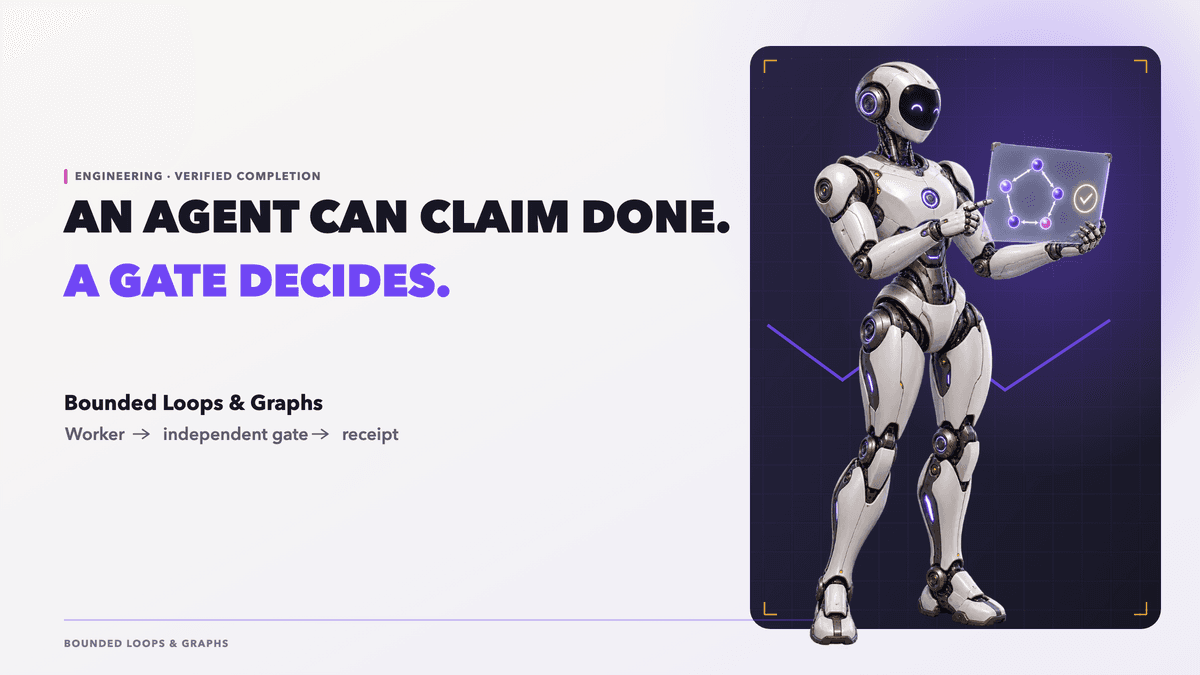
Research explained
See how Bounded Loops & Graphs uses independent gates, pre-run spend bounds, and receipts to verify AI agent work. Includes a keyless example and graph flow.
Field reports
Amodei's pacing call, three rival endorsements, a researcher's exit, a 1,200-agent swarm breach, an IPO split — and the bounded-loop engineering half nobody named. With sources.
What's changing
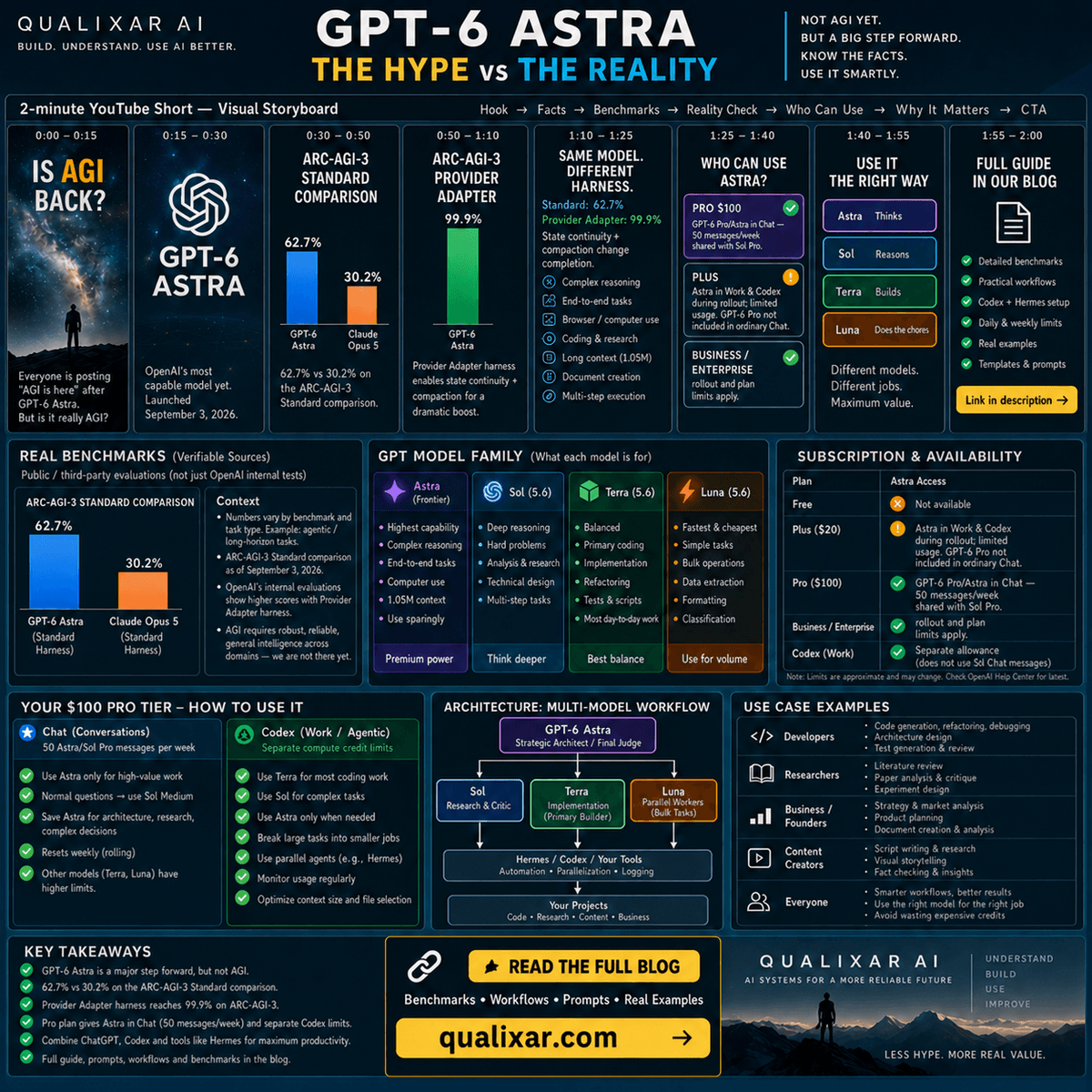
GPT-6 Astra hit 99.9% on ARC-AGI-3 with a provider adapter, but 62.7% under the Standard harness. Here is the benchmark reality and the practical guide to Astra, Sol, Terra, Luna, Codex and Hermes.
How we built it
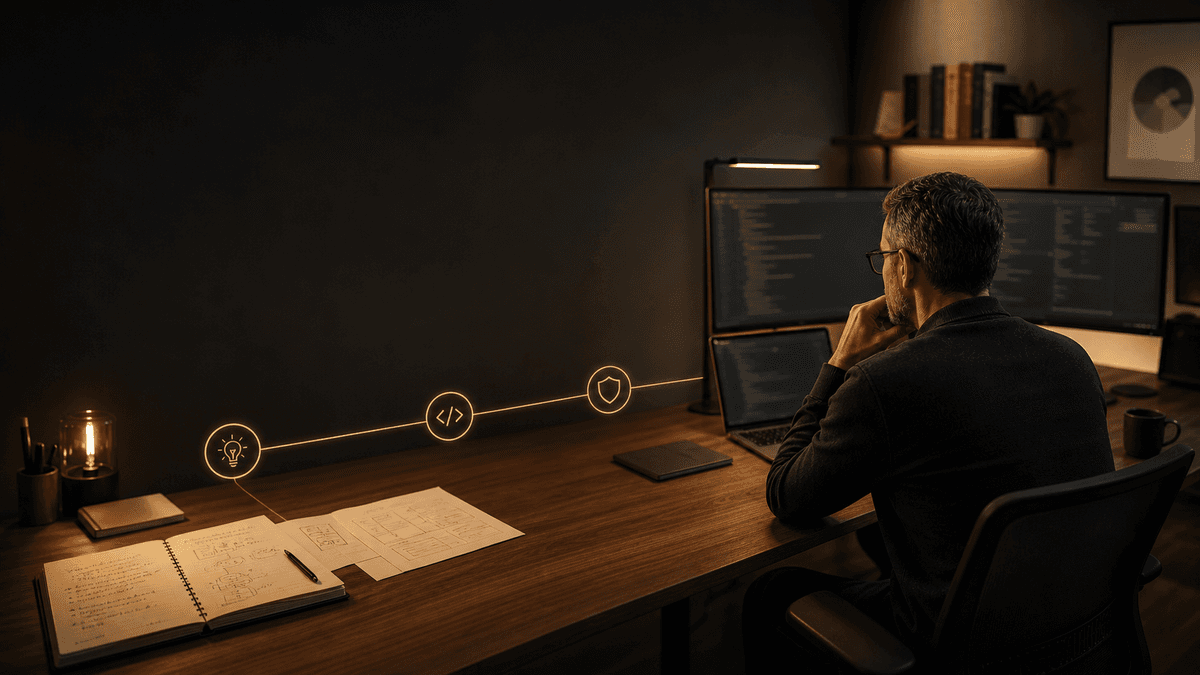
A practical workflow for choosing GPT-5.6 tiers, keeping local MCP useful, managing context deliberately, and moving from Claude Code without copying unsafe configuration.
How we built it
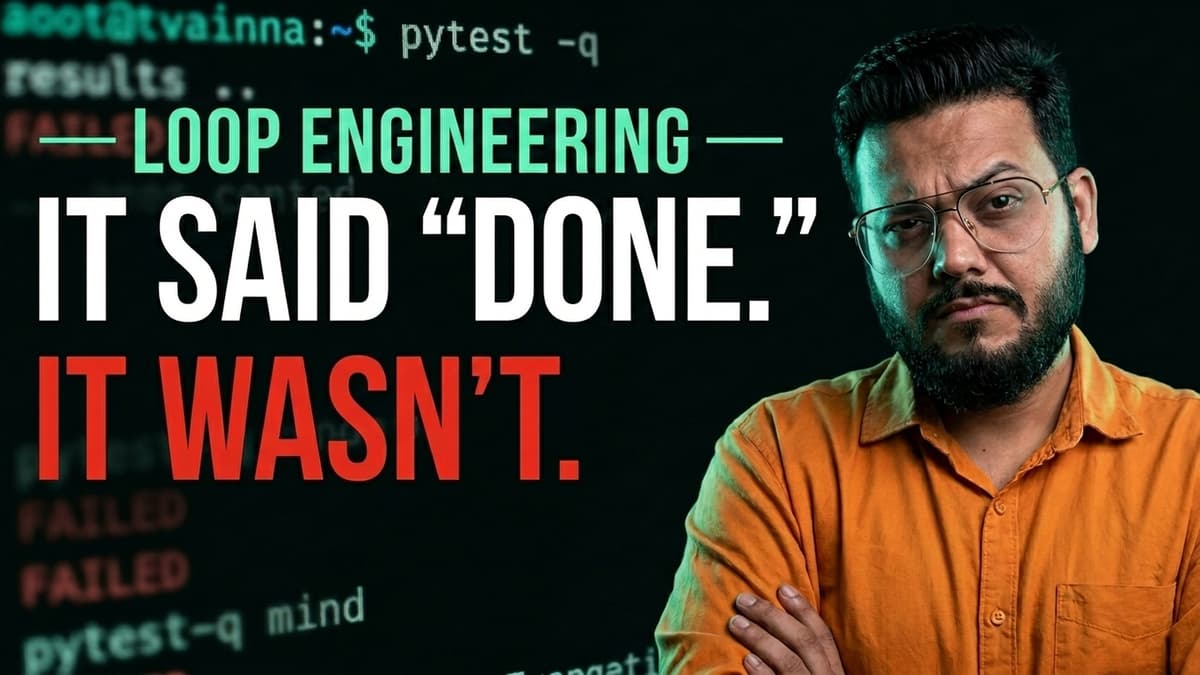
Everyone says stop prompting your agent and write a loop. Almost nobody explains what a loop actually is. Here is the missing manual — the ten words, the inner loop, the outer loop, the runner that connects them, and the gate that decides when to stop.
How we built it
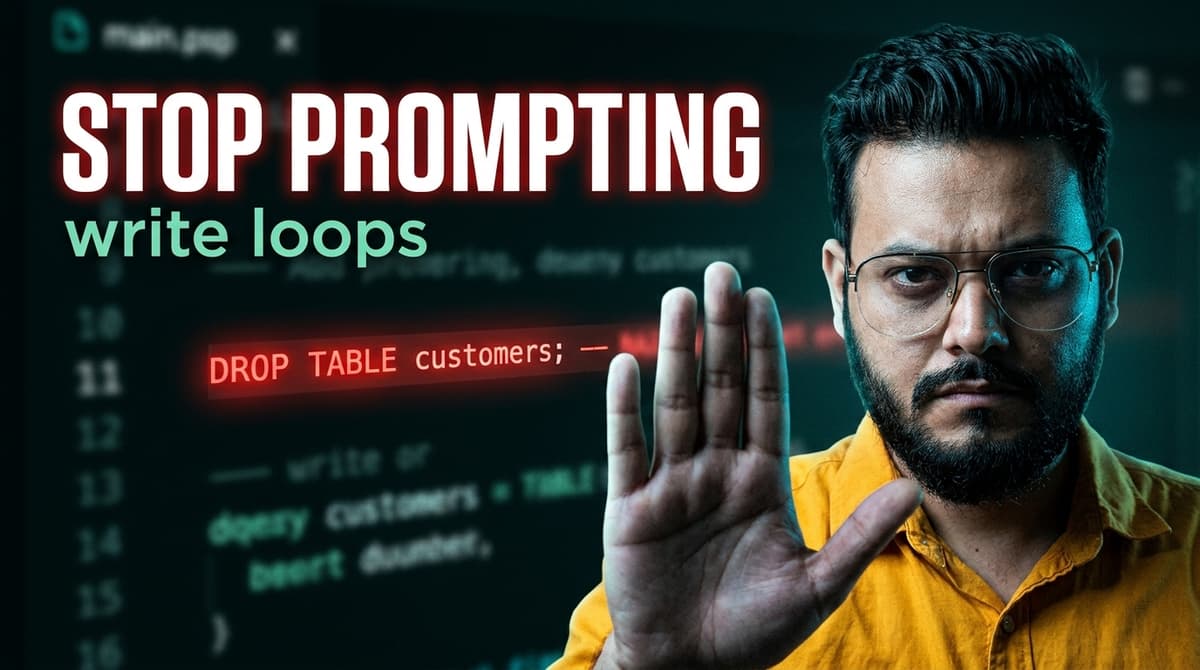
An agent deleted a customer table in eight seconds. The model was one of the good ones. The problem was never the model — it was the loop around it, and whether anyone put a bound on it. A from-the-floor build of the agent harness, proven live.
Field reports
A runaway agent burned $6,531. GitHub's own bots strained its servers. OpenAI shipped a cyber agent only behind a verify-loop. Every AI failure this fortnight traced to one missing thing — not intelligence. It's the harness.
Field reports
This fortnight a government switched off the most capable AI on Earth in hours, the market crowned its 'most reliable' vendor, and Nadella called AI 'token capital.' Three stories, one category error — and the architecture that fixes it.
Field reports
What the burn-rate reality of Claude Fable 5 tells us about AI model selection — and the routing discipline that fixes it.
How we built it
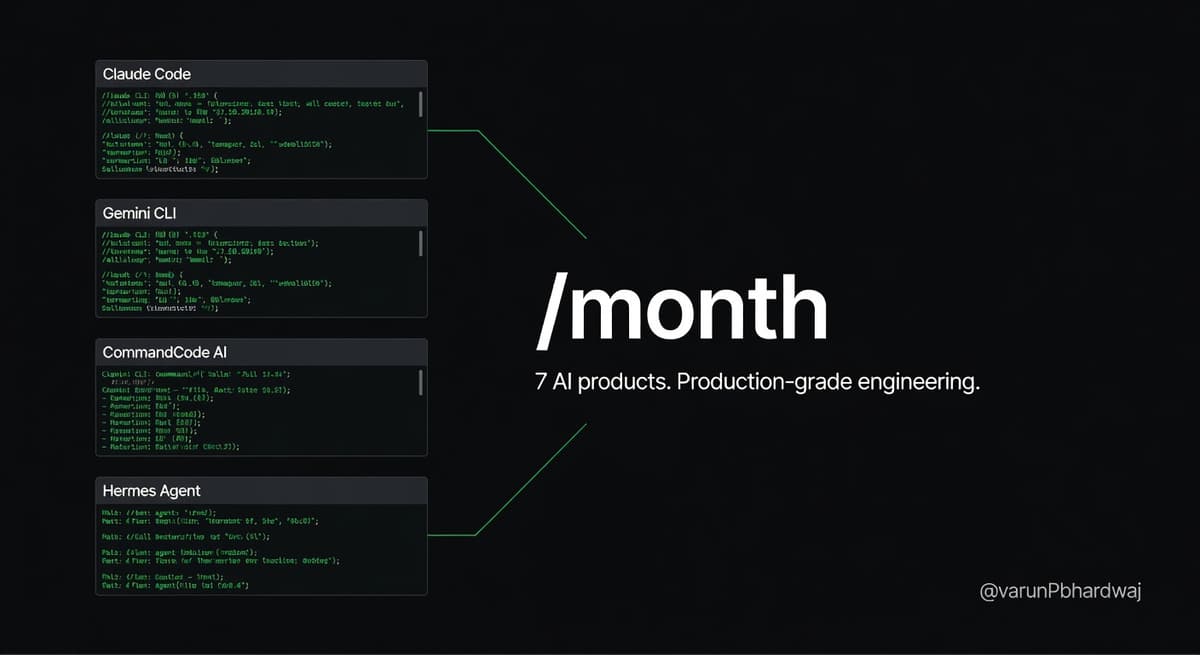
I maintain 7 AI products, 4 websites, and active research for $24/month — under $1/day. Here's the exact four-CLI architecture with real benchmarks, free models, and the Qualixar tooling stack.
What's changing
Open-sourcing Agent Amplifier — a deterministic runtime amplification layer for AI coding agents. Plugs into Claude Code, Cursor, GitHub Copilot. 1.71B tokens dogfooded. AGPL-3.0.
Field reports
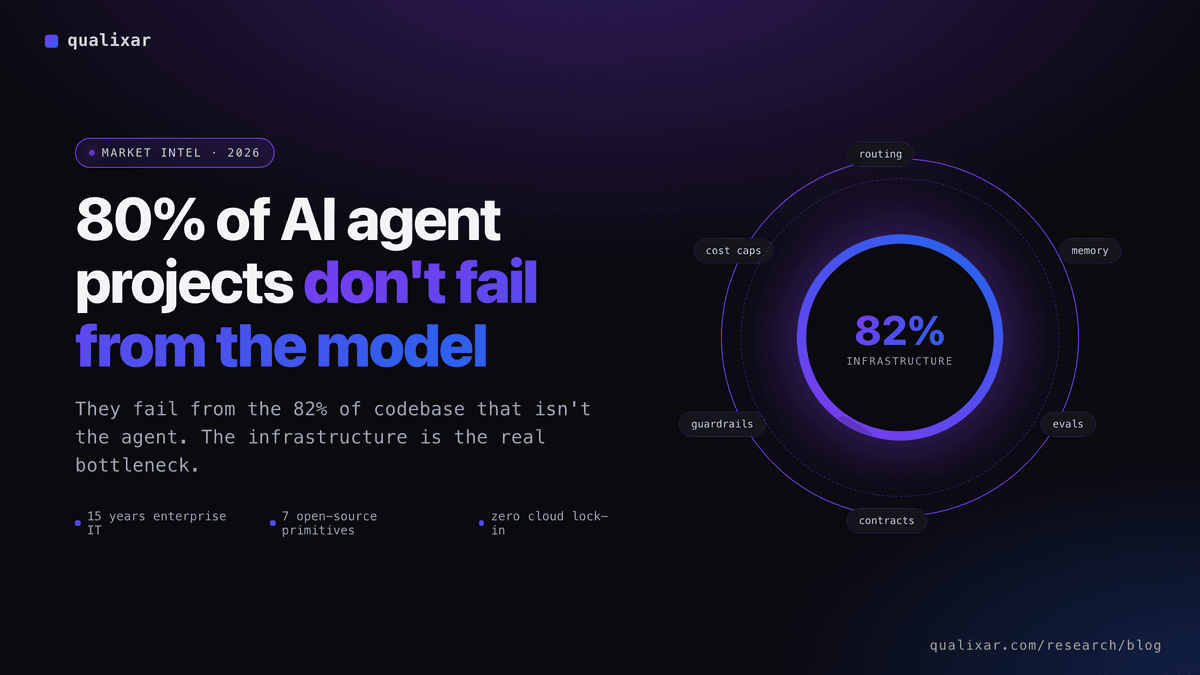
Gartner says 40% of agentic AI projects will get cancelled. After 15 years in enterprise IT and building agent systems that actually shipped, I found the real bottleneck — and it has nothing to do with model intelligence.
How we built it
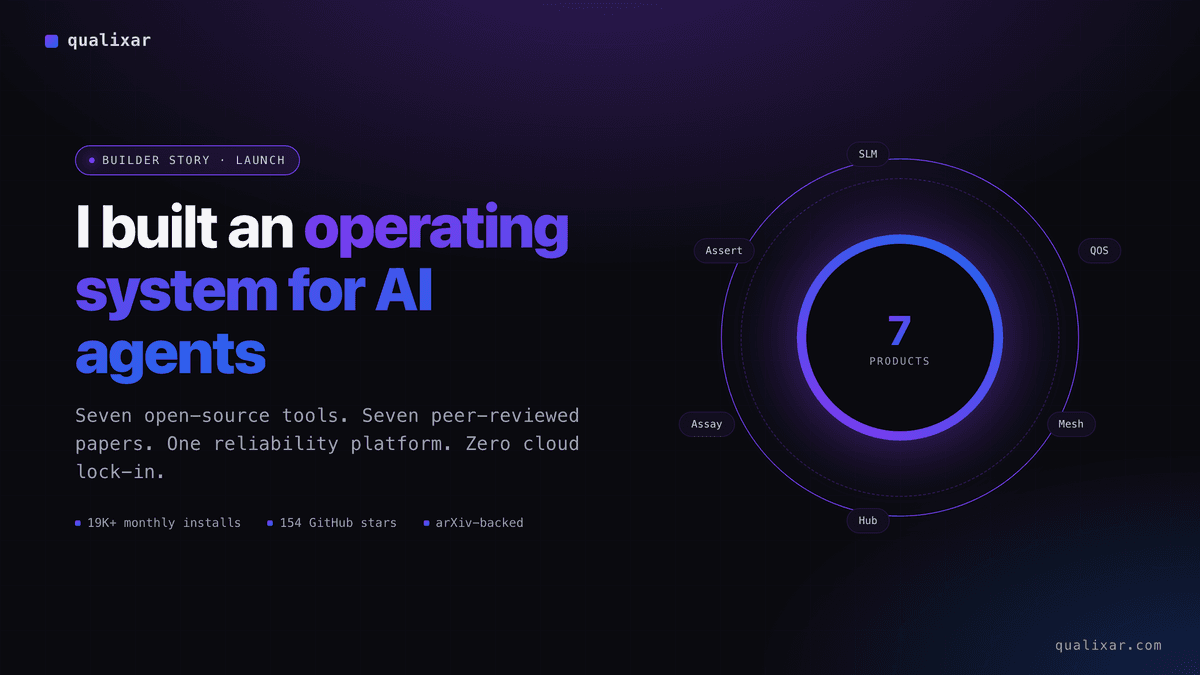
After 15 years as a solution architect and a catastrophic data loss that wiped my entire codebase, I rebuilt an agent runtime from scratch. 2,936 tests, 13 execution topologies, and a 7-agent adversarial audit later — here's the honest story.
How we built it
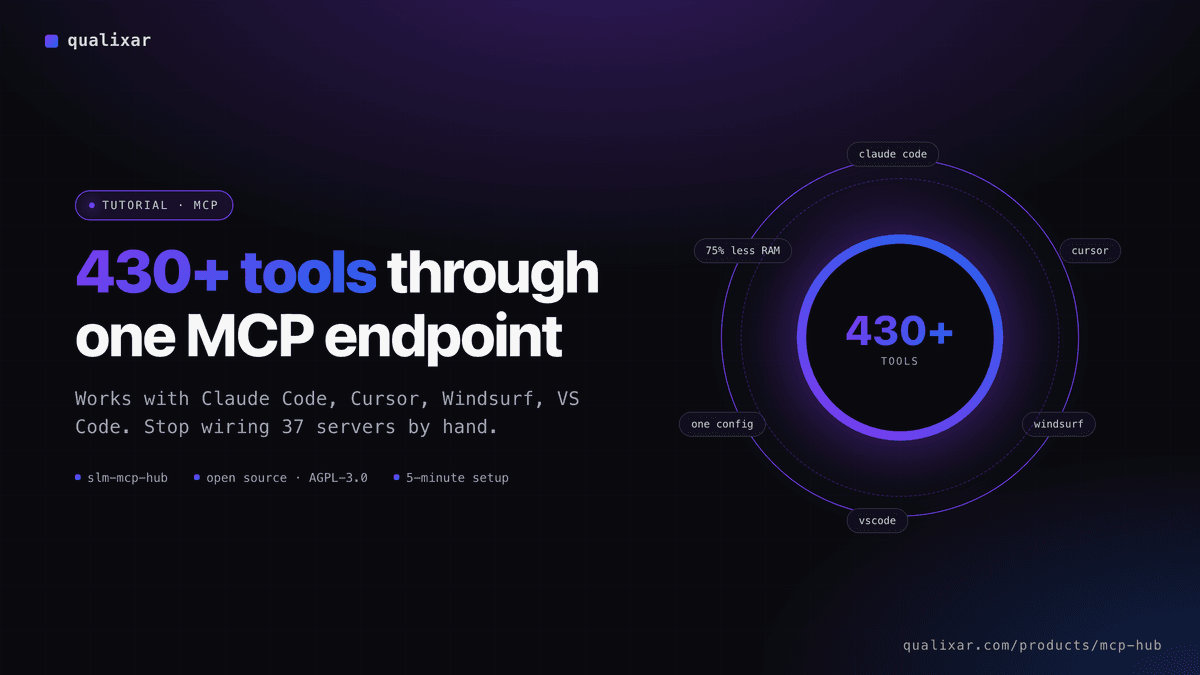
Qualixar OS is an open-source agent orchestration runtime with 25 MCP tools. Drive the entire multi-agent system from Claude Code without touching a browser. This tutorial walks through connecting QOS as an MCP server and running a multi-agent code review team from your terminal.
Field reports
Frameworks give you agent components. But routing, quality, cost control, memory, and observability? You're on your own. It's time for an operating system layer.
How we built it
Sequential, Parallel, Hierarchical, DAG, Debate, Mesh, Star, Grid, Forest, Circular, Mixture-of-Agents, Maker — when to use each, with ASCII diagrams.
What's changing
Claude Managed Agents launched yesterday. Here's what it means — and why the open source alternative matters more than ever.
How we built it
An architecture preview for integrating Qualixar OS with Claude Agent Teams and Managed Agents — subagent definitions, hybrid topology design, and the managed agents adapter pattern.
What's changing
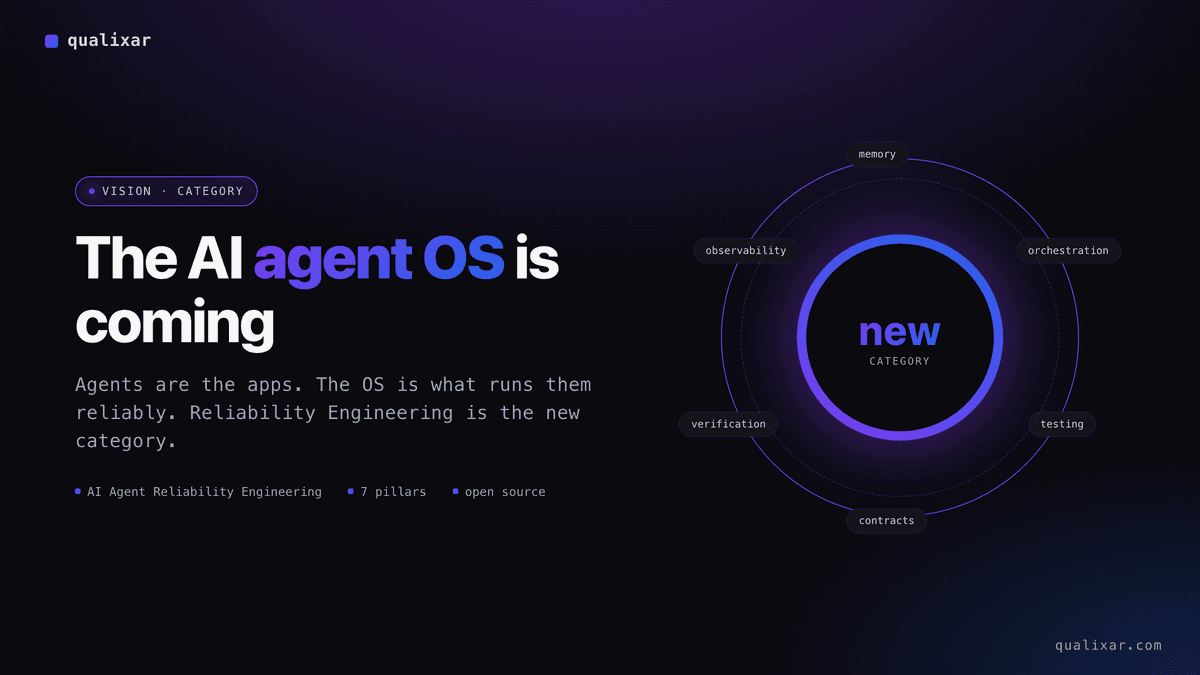
40% of agentic AI projects get cancelled. The problem isn't the agents — it's the missing infrastructure layer beneath them.