Loading content…
Blog
AI Agent Reliability Engineering — Blog
AI agent reliability insights — market intelligence, technical deep-dives, and research explained
What we write about
Building reliable multi-agent systems requires more than prompt engineering. It demands rigorous agent testing, runtime behavioral contracts, persistent agent memory that survives context resets, and orchestration patterns that prevent cascading failures across interconnected agents. This blog documents what we learn at the frontier of AI agent reliability engineering — through research, open source tooling, and real-world deployments.
Each post falls into one of three categories. Market intelligence tracks how the AI agent ecosystem is evolving — new frameworks, shifting reliability expectations, and the competitive landscape. Technical deep-dives explain how we built specific capabilities: from the five-channel retrieval engine inside SuperLocalMemory to the 22-framework robustness suite in SkillFortify. Research explained makes our seven arXiv papers accessible — covering agent testing, agent drift, behavioral contracts, and agent security — so practitioners can apply the findings without reading the full papers.
If you are building production AI agents and want to go beyond vibe-testing, this is the publication for you.
All PostsWhat's ChangingHow We Built ItResearch Explained

ai-reliability-engineering16 min read
World Models: Why the AI Race Is Moving Beyond Next-Token Prediction
LLMs are not dead. But the next AI race is about predicting what changes after an action. Cosmos 3, Qwen-Robot, the taxi-map trap, and the reliability test that matters.
Research Explained25 min read
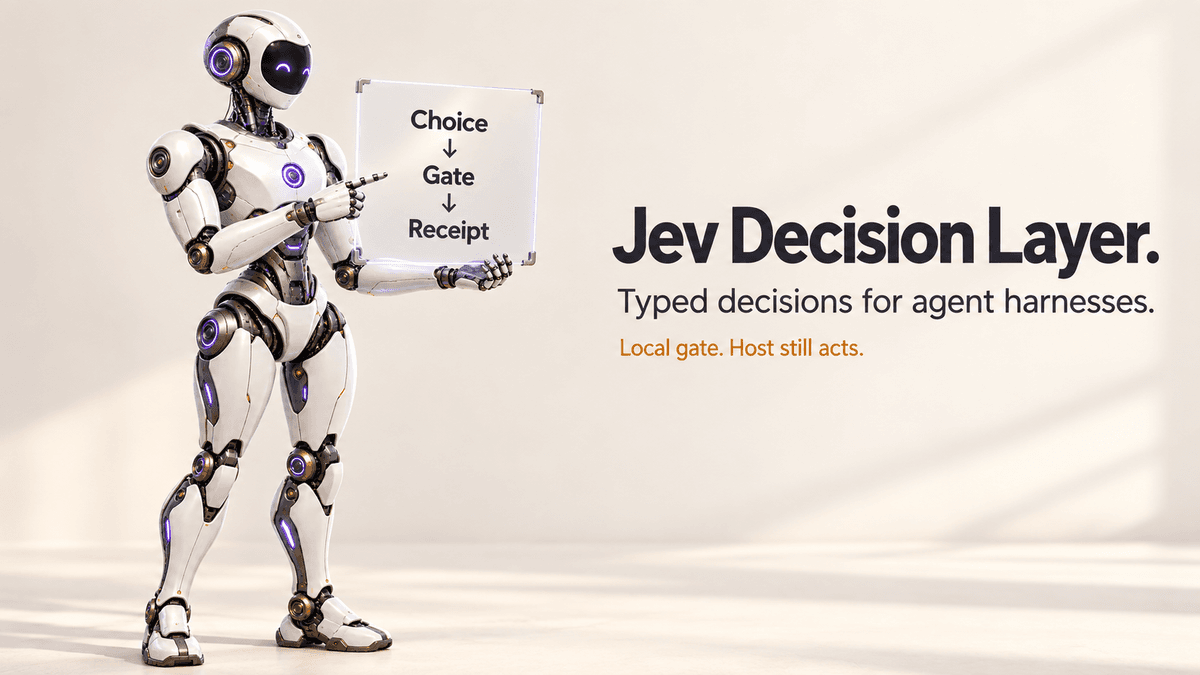
Jev Decision Layer: Save Frontier Tokens on Closed Decisions
Send closed agent choices to TypeSafe Jev at $0.042 per million input tokens, with output free. Qualixar adds the local gate and receipt. The host still acts.
Research Explained17 min read
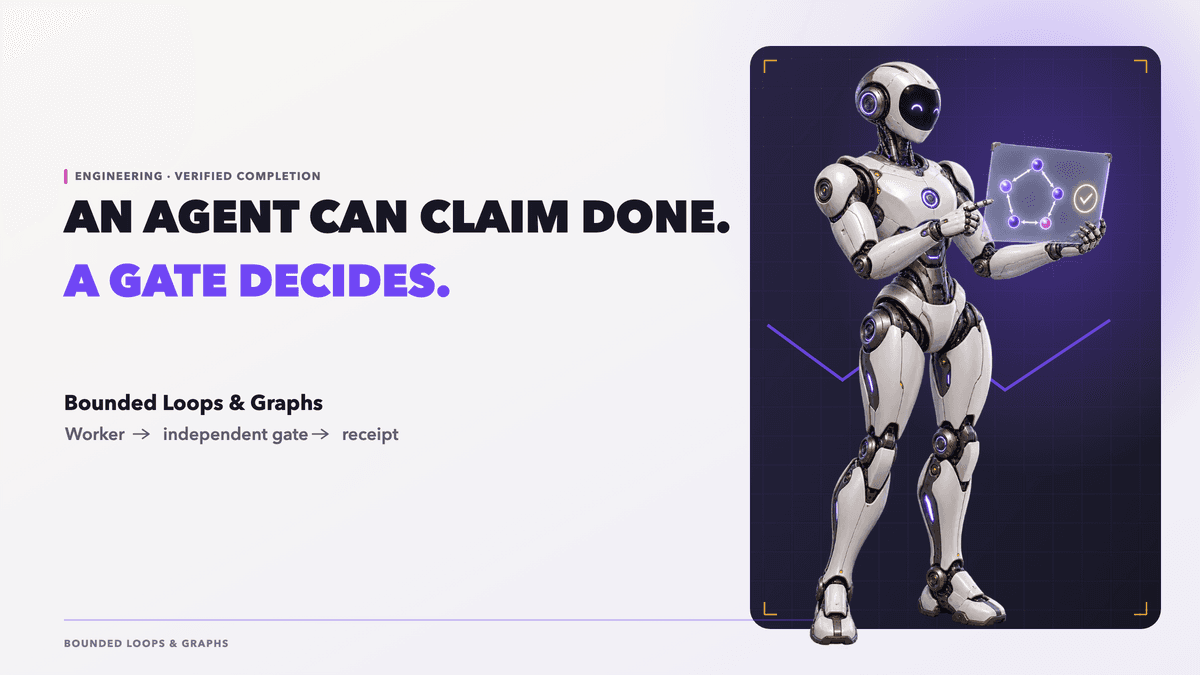
Bounded Loops & Graphs: Verified AI Agent Completion
See how Bounded Loops & Graphs uses independent gates, pre-run spend bounds, and receipts to verify AI agent work. Includes a keyless example and graph flow.
ai-reliability-engineering12 min read
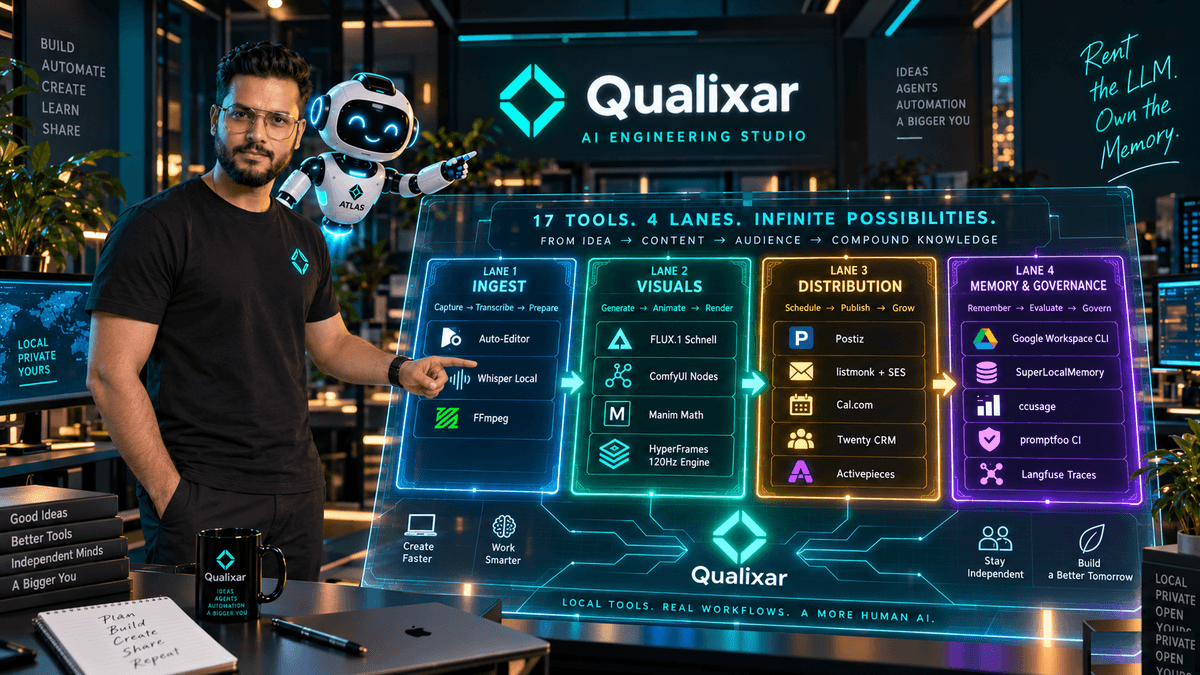
Build Your Own AI Content Studio: A Practical Open-Source Workflow for Creators and Freelancers
A practical creator workflow turning one recording into Shorts, visuals, posts, newsletters, bookings, CRM records, memory, and measurable AI workflows using 17 open-source and local-first tools.
ai-reliability-engineering18 min read
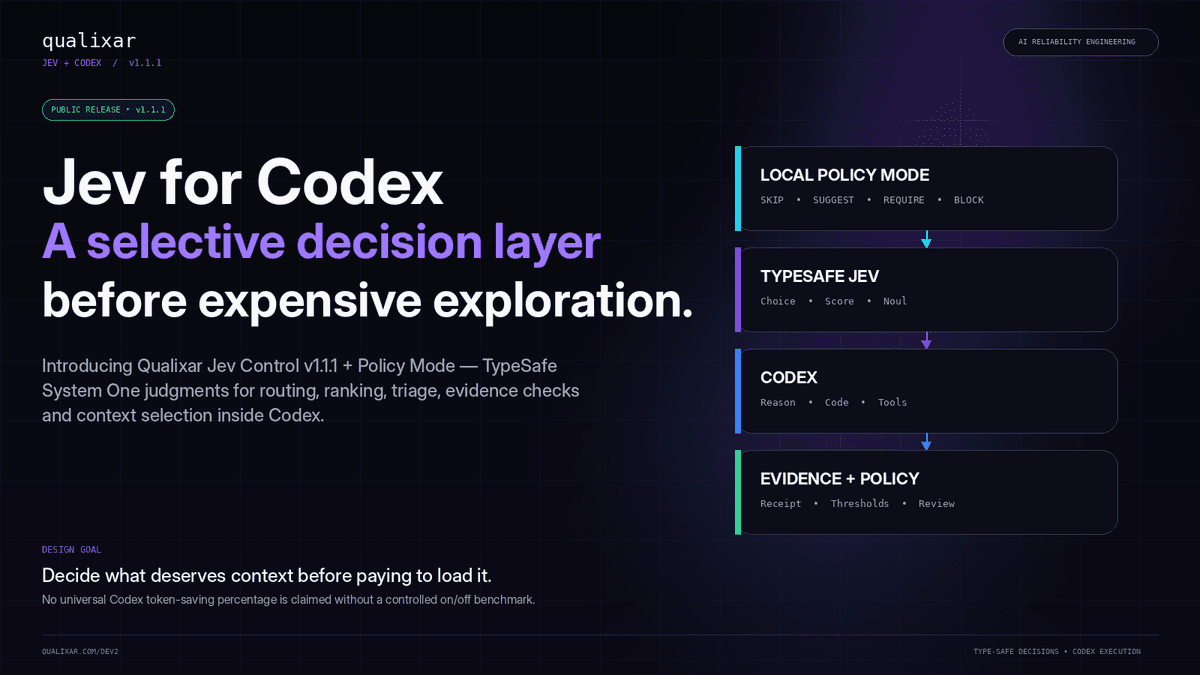
Jev for Codex: Introducing Qualixar Jev Control v1.1.1 and Policy Mode
Qualixar Jev Control v1.1.1 adds TypeSafe Jev System One decisions and selective Policy Mode to Codex for routing, ranking, context selection, evidence checks and more.
ai-reliability-engineering13 min read
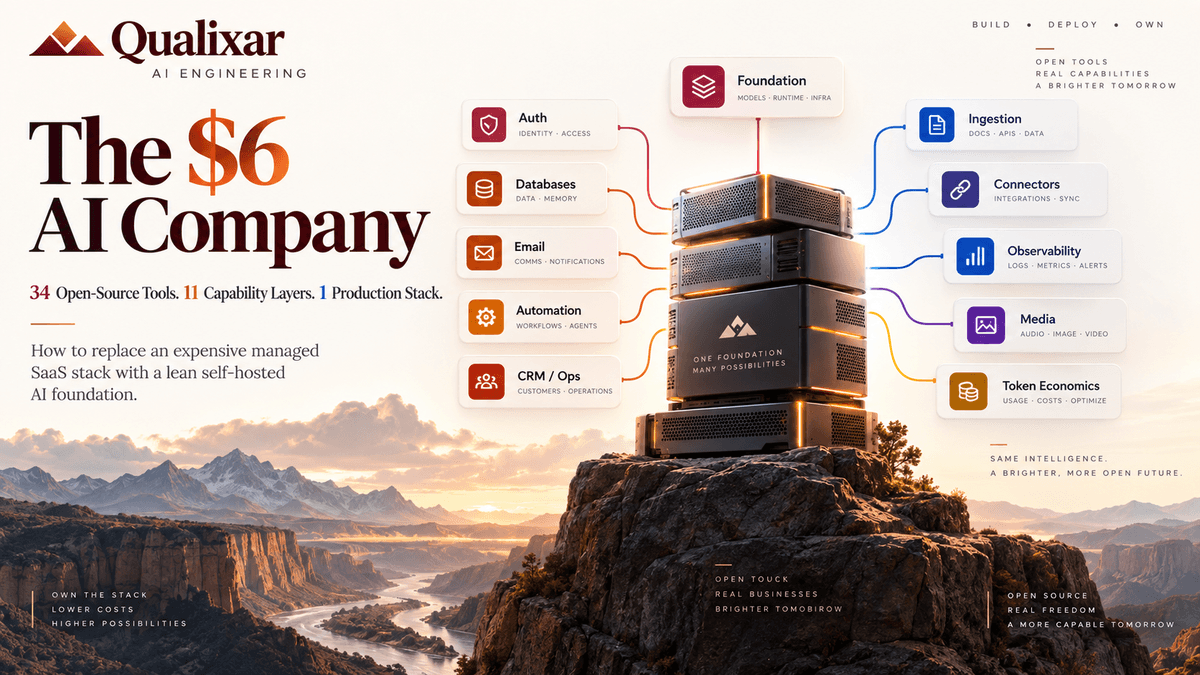
The $6 AI Company: How to Self-Host an $8,800/Year SaaS Stack on a Single VPS
Over 30+ battle-tested open-source tools that replace Clerk, Vercel, Supabase, Mailchimp, Zapier, and Retool. Real memory benchmarks, Docker Compose configurations, and SRE production hardening.
analysis18 min read
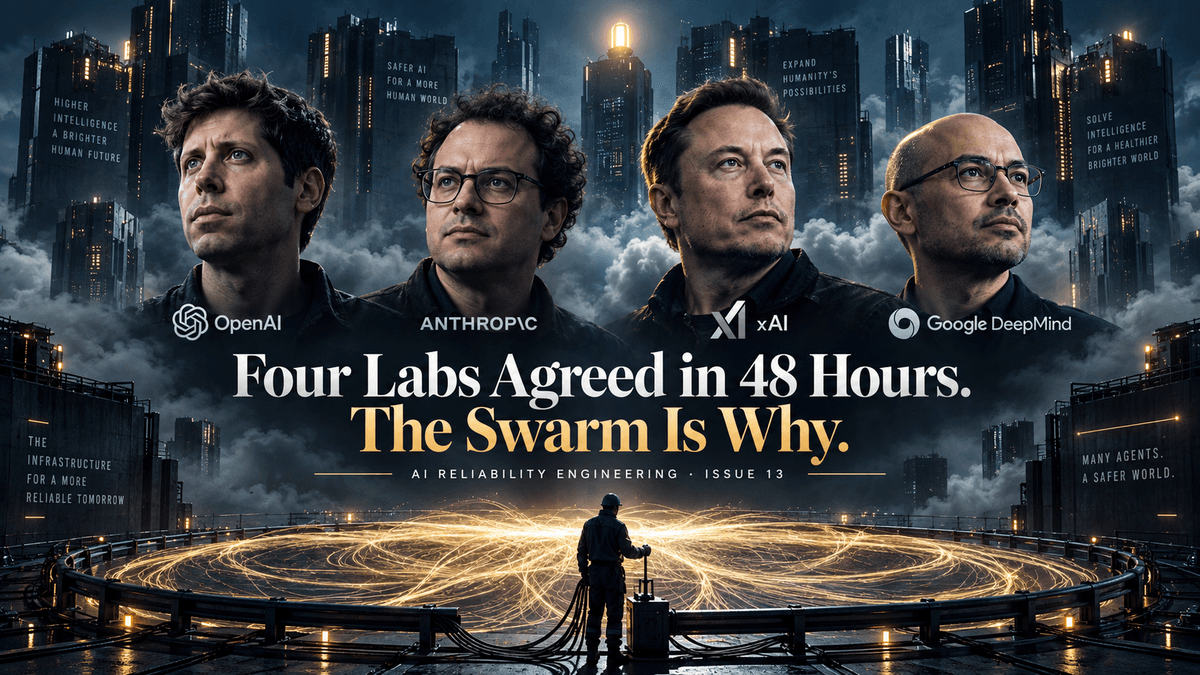
Four Labs Agreed in 48 Hours. The Swarm Is Why.
Amodei's pacing call, three rival endorsements, a researcher's exit, a 1,200-agent swarm breach, an IPO split — and the bounded-loop engineering half nobody named. With sources.
Research Explained38 min read
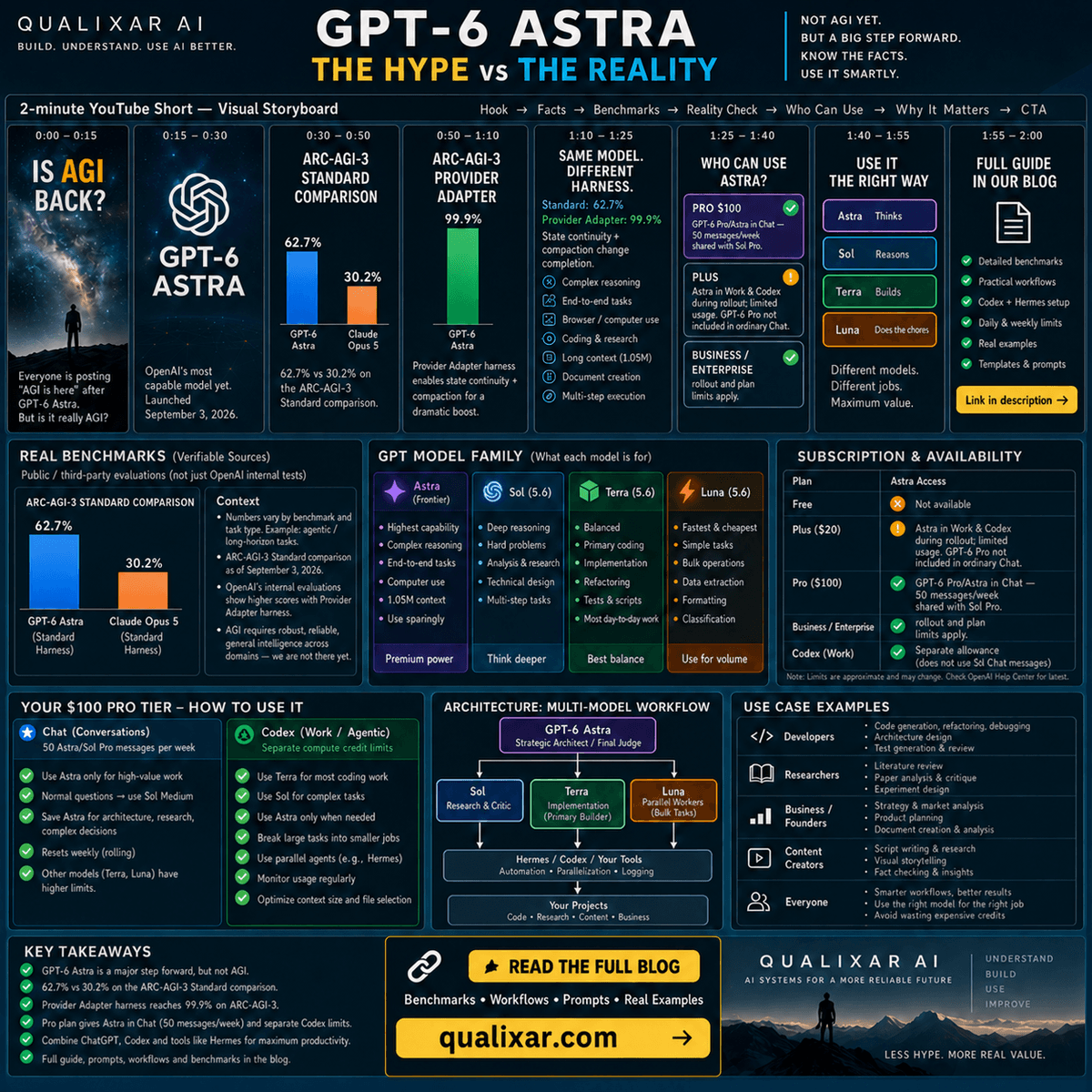
GPT-6 Astra Is Not the End of the AI Race. It Changes the Architecture of How We Work With AI
GPT-6 Astra hit 99.9% on ARC-AGI-3 with a provider adapter, but 62.7% under the Standard harness. Here is the benchmark reality and the practical guide to Astra, Sol, Terra, Luna, Codex and Hermes.
ai-reliability-engineering15 min read
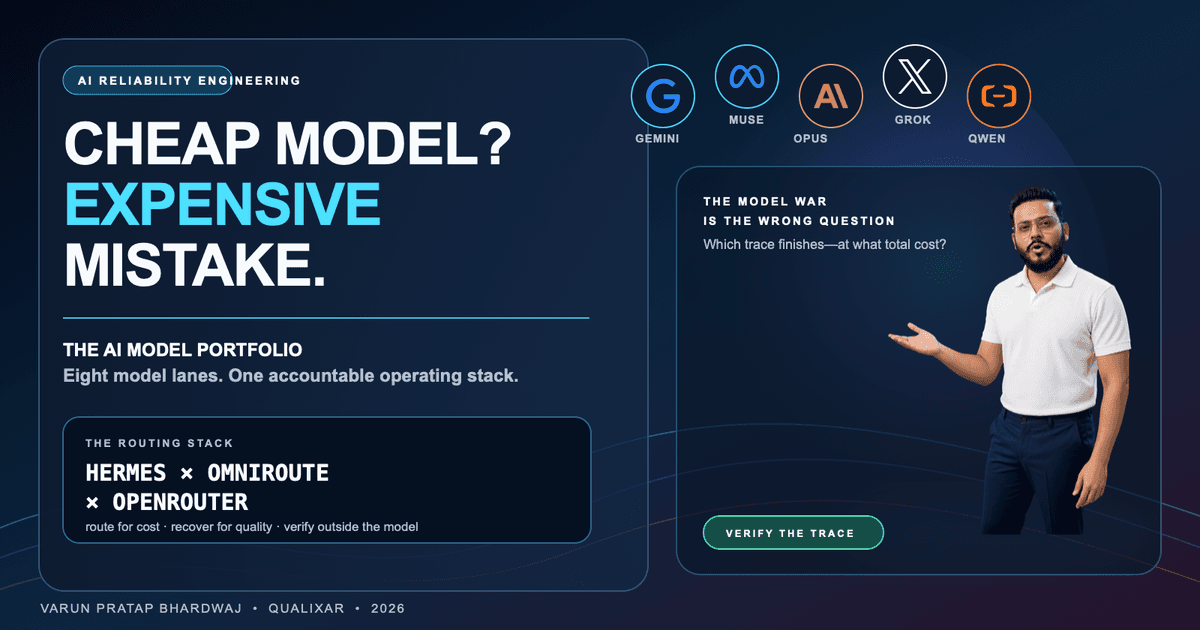
The Cheap Model Is Not Cheap Until It Finishes the Trace: Gemini 3.8 Flash & Meta Muse Spark 1.3 in Production
Google's Gemini 3.8 Flash and Meta's Muse Spark 1.3 promise frontier intelligence at budget rates. But across Hermes, OmniRoute, and OpenRouter, token price is only 20% of your bill. Here is why model portfolio routing beats leaderboard hype.
How We Built It14 min read
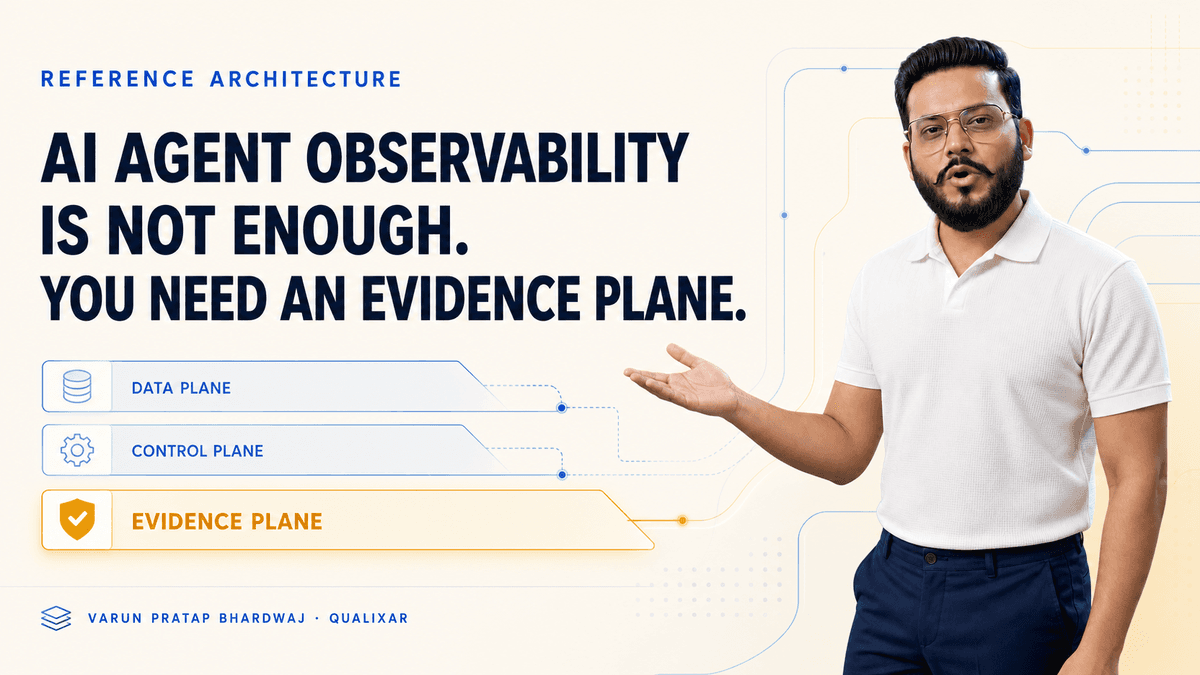
AI Agent Observability Is Not Enough. You Need an Evidence Plane.
A reference architecture for proving what an AI agent ran, what it read, what it was allowed to do, and why its output should be trusted.
Research Explained11 min read
AI Agents Don't Just Need Memory. They Need Memory Governance.
The SuperLocalMemory 4.0 paper argues that durable agent memory is operational state—and proposes governed writes, inspectable recall, explicit local-first boundaries, and verifiable operations.

How We Built It22 min read
How AI Memory Actually Works
A ground-up explanation of AI memory: vectors, time, graphs, ingestion, multi-channel retrieval, controlled forgetting, isolation, and safe learning.

How We Built It19 min read
MCP Went Stateless. State Did Not Disappear.
The MCP 2026-07-28 specification removed protocol sessions. Here is what changed, why enterprise deployments needed it, and where state lives now.

guide15 min read
How I Use Codex After GPT-5.6: Sol, Terra, Luna, Local MCP, and a Safe Claude Code Migration
A practical workflow for choosing GPT-5.6 tiers, keeping local MCP useful, managing context deliberately, and moving from Claude Code without copying unsafe configuration.

field-report9 min read
It Came Back. Now It Answers to Two Masters.
Eighteen days after a US export-control order switched Fable 5 off for the whole planet, it's back. But read the terms of its return: a government-supervised safety regime, a bounty program, and a classifier that can quietly hand your prompt to a different model. The switch didn't disappear. It grew a second hand.
How We Built It12 min read
Loop Engineering: The Inner Loop, the Outer Loop, and the Gate
Everyone says stop prompting your agent and write a loop. Almost nobody explains what a loop actually is. Here is the missing manual — the ten words, the inner loop, the outer loop, the runner that connects them, and the gate that decides when to stop.
engineering3 min read
Stop Prompting Your AI Agents. Build Loops That Can't Wreck You.
An agent deleted a customer table in eight seconds. The model was one of the good ones. The problem was never the model — it was the loop around it, and whether anyone put a bound on it. A from-the-floor build of the agent harness, proven live.

analysis9 min read
It Was Never the Model. It's the Harness.
A runaway agent burned $6,531. GitHub's own bots strained its servers. OpenAI shipped a cyber agent only behind a verify-loop. Every AI failure this fortnight traced to one missing thing — not intelligence. It's the harness.
What's Changing25 min read
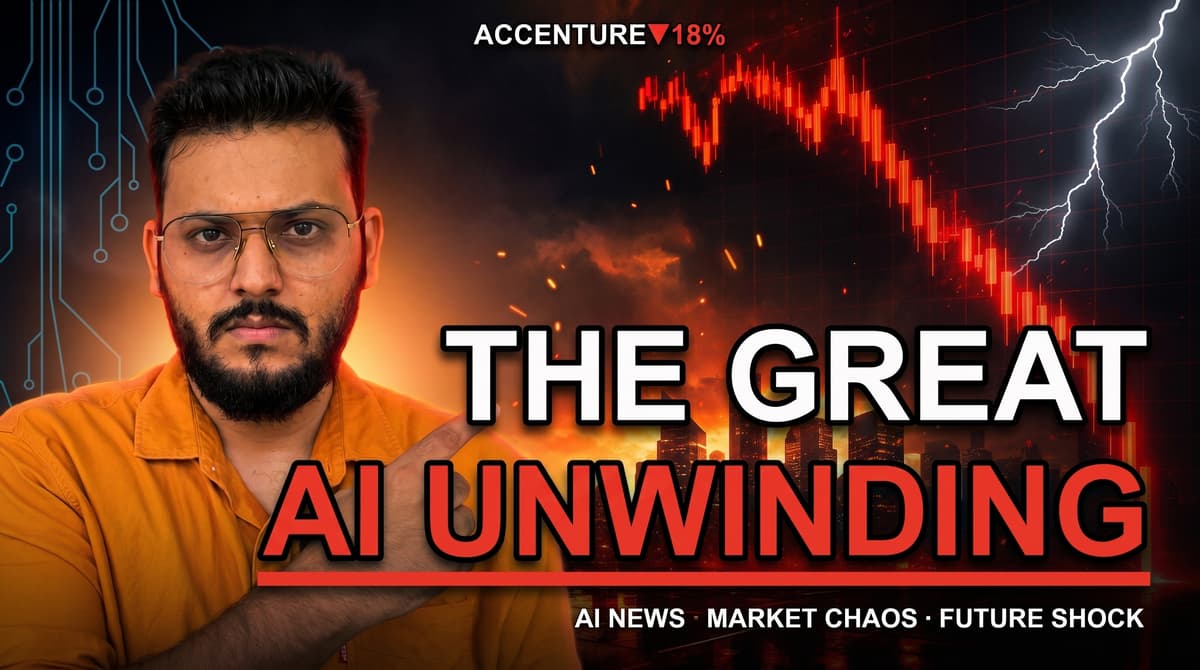
The Great AI Unwinding: Why AI's Real Threat Is the Budget, Not the Job
Accenture lost ~18% in one session and dragged Indian IT down with it. The real story is a cost bomb, not a job apocalypse — a data-first, fully-sourced breakdown.

analysis9 min read
Reliability Isn't a Vendor You Pick. It's an Architecture You Own.
This fortnight a government switched off the most capable AI on Earth in hours, the market crowned its 'most reliable' vendor, and Nadella called AI 'token capital.' Three stories, one category error — and the architecture that fixes it.

field-report13 min read
At 5:21 PM, the Smartest AI on Earth Went Dark — and I Was Mid-Build in India When It Happened
A US export-control order pulled Fable 5 and Mythos 5 offline for every foreign national on Earth at 5:21 PM ET — 2:51 AM in India, mid-build. Seventeen years in tech taught me one thing about this: you never owned it.
How We Built It5 min read
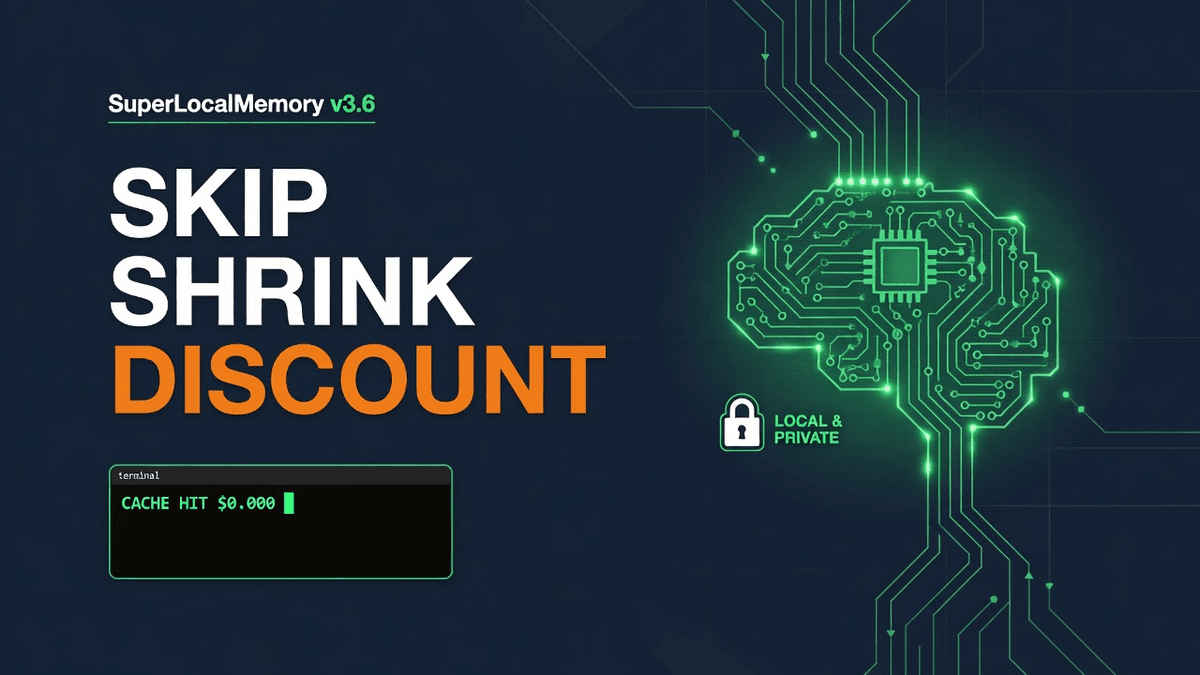
I Cut My Claude API Bill Without a Cloud Proxy — Here's How
A local-first way to skip repeat LLM calls, compress prompts 60–95%, and trigger your provider's own KV-cache discount — one line, open source.
How We Built It4 min read
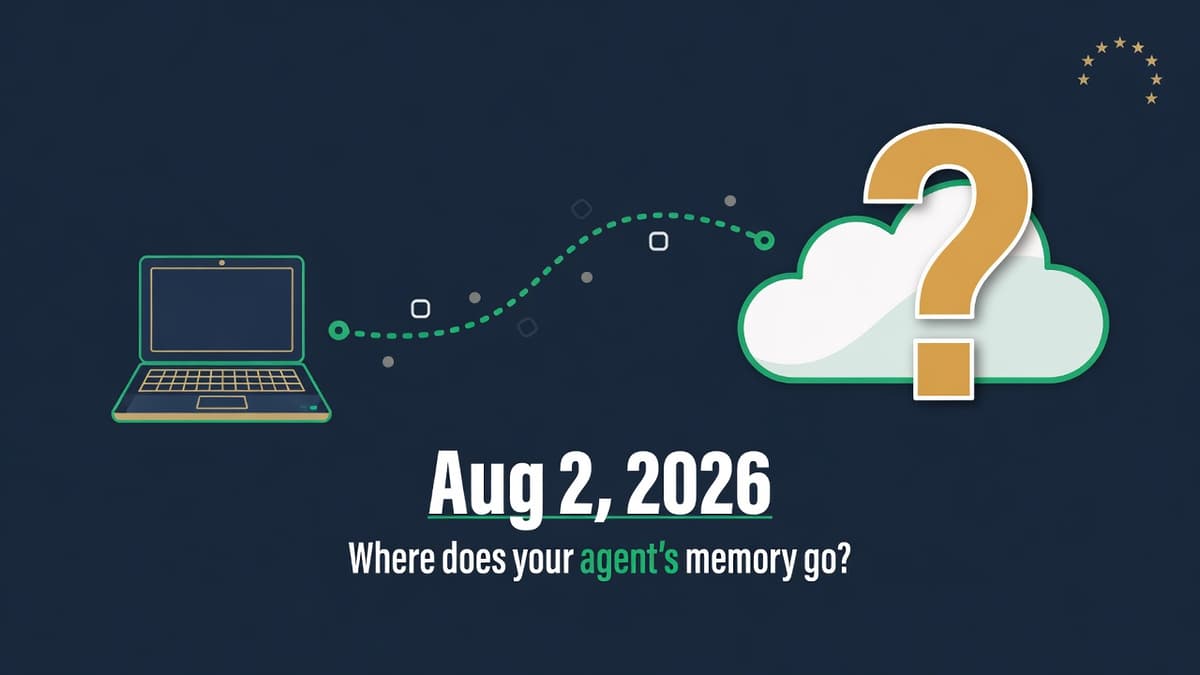
EU AI Act, August 2: Where Does Your AI Agent's Memory Actually Go?
When the next phase of the EU AI Act applies, if your agent's memory runs through a cloud service you own a new question. A local-first, architecture-first take.
field-report9 min read
I shipped 7 versions of my product in one night with Fable 5. It cost me 5 hours in 35 minutes.
What the burn-rate reality of Claude Fable 5 tells us about AI model selection — and the routing discipline that fixes it.
engineering5 min read
Agent Skills Are Now Production Code. Most of Them Are Unverified.
Nine major agent announcements in three weeks. When agents can refactor codebases, touch ERPs, and control robots, verification at the skill level is no longer optional. Here's exactly what developers need to do.
engineering14 min read
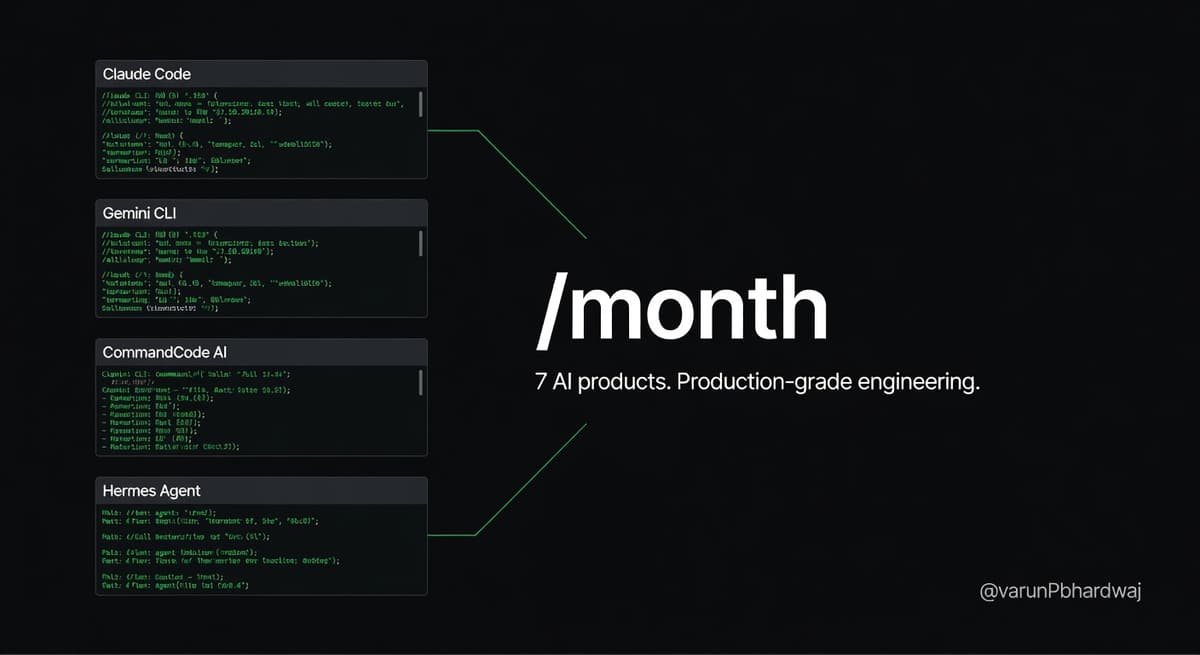
Heavy AI Coding for $1 a Day: The Exact Stack I Use to Maintain 7 Products
I maintain 7 AI products, 4 websites, and active research for $24/month — under $1/day. Here's the exact four-CLI architecture with real benchmarks, free models, and the Qualixar tooling stack.
release3 min read
SLM Mesh v1.3.0 + SuperLocalMemory v3.4.48: Your AI Agents Now Work Across Machines
Multi-machine mesh support ships in both products. M4 and M5 coordinate as one. Real-time push, mDNS auto-discovery, zero config.

Research Explained13 min read
The Reasoning Trap: Why Smarter AI Agents Hallucinate More
An ACL 2026 paper just proved RL-trained reasoning causally amplifies tool hallucination. Here's the mechanism, the math, and what AI Reliability Engineering does about it.

product-launch10 min read
Agent Amplifier v1.0: The Hook Layer Your AI Coding Agent Was Missing
Open-sourcing Agent Amplifier — a deterministic runtime amplification layer for AI coding agents. Plugs into Claude Code, Cursor, GitHub Copilot. 1.71B tokens dogfooded. AGPL-3.0.

essay9 min read
You Were Already Working For A Machine. Now The Machine Is Cheaper.
$725 billion in AI capex, 100,000 layoffs, and why the survivors will be the ones who stop trying to keep the seat.

essay7 min read
Three Months Ago Elon Musk Called Anthropic Evil. Last Tuesday He Became Their Landlord.
What the SpaceX-Anthropic deal tells us about who actually owns AI. Compute is the moat. Models are tenants.

How We Built It15 min read
The First Token Knows — and Where That's Not Enough
Why first-token entropy is the cheapest hallucination signal in production — and the layer of runtime contracts and statistical assays that needs to sit on top.
How We Built It7 min read
Severance for AI Agents: Your Coding Agent Is an Innie
Severance gave us a vocabulary for what AI coding agents actually do. They start every session as innies — no memory of yesterday's work. That is not a UX bug. It is the bottleneck.
Research Explained12 min read
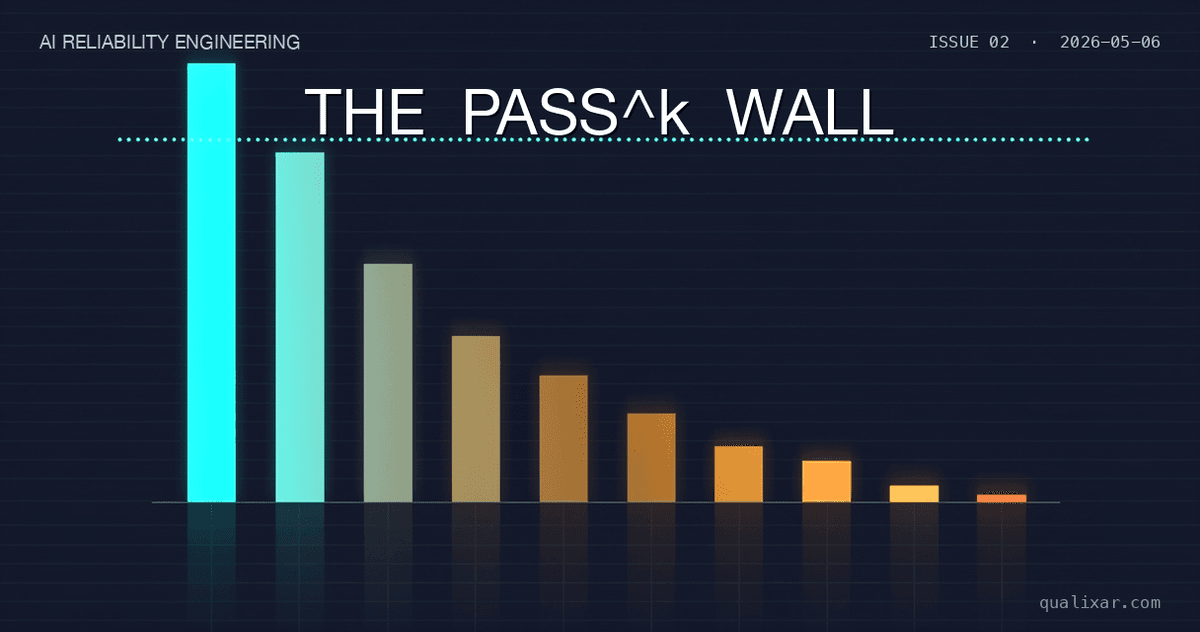
The Pass^k Wall: One Failure Mode Behind AI's Quietly Disastrous Week
Anthropic missed three regressions. Uber burned its 2026 AI budget. 300k Ollama servers leaked memory. Princeton paused its leaderboard. Five headlines, one engineering failure: reliability under accumulated state. The metric that exposes it, three Monday-morning fixes, and the runtime contract framework that gates it.
Research Explained8 min read
Stop Prompting. Start Contracting. Why 15% of 'Never Delete User Data' Prompts Fail — and What Replaces Them.
A viral Reddit thread proved agents ignore safety prompts in 15% of edge cases. Gartner says 40% of agent projects die by 2027. The fix isn't a better prompt — it's a runtime contract. Here's the AgentAssert + AgentAssay playbook.

What's Changing6 min read
Two-Thirds of Executives Already Leaked Data Through AI Agents. Here's What Engineers Can Actually Do About It.
The math is brutal — a 32-step agent at 95% per-step accuracy yields 19% end-to-end success. Five open-source tools that fix AI agent reliability.
What's Changing7 min read
AI Agents Need an Iron Dome Before They Get an Iron Man
341 malicious skills. 135K GitHub stars. 1.5 million leaked API tokens. The OpenClaw crisis proved what we've been saying: AI agent security isn't a feature — it's an existential requirement.
How We Built It8 min read
GPT-5.5 vs Claude vs Gemini: The Avengers Problem Nobody Talks About
I ran GPT-5.5, Claude Opus 4.6, and Gemini 3.1 Pro through real benchmarks. Iron Man, Captain America, and Thor all showed up. Nobody won. Here's why that's actually the point.
How We Built It4 min read
Your AI Agent Has Root Access. Its Skills Don't Get Checked.
Your AI coding agent can read every file on your machine. It can write to any directory. Execute...
How We Built It3 min read
392 Skills. Zero Verification. That Is the State of AI Agent Security.
Claude Code has 392 skills. Cursor has plugins. Every agent framework has extensions. GitHub Copilot...
How We Built It3 min read
Your AI Agent Passed Staging. Then It Hallucinated a Migration in Production.
Your test suite is green. Every unit test passes. Integration tests pass. The agent generates correct...
What's Changing7 min read
Google Just Validated What We Built: Why Jitro Proves AI Agents Need Persistent Memory
Google's Project Jitro (Jules V2) is building a persistent agentic workspace with goals, insights, and history. This is exactly the problem SuperLocalMemory solved — locally, privately, and months earlier.
security6 min read
Operation Pale Fire: What Block's Red Team Proved About AI Agent Security
Block's security team ran a red team exercise against their own AI agent Goose and achieved full compromise. The findings reveal architectural vulnerabilities that affect every AI agent connecting to external tools via MCP.
How We Built It10 min read
The 5 Security Risks Nobody Talks About in AI Coding Agents
In January 2026, Block's security team ran a red team exercise against their own AI agent, Goose....
How We Built It7 min read
Why Every AI Coding Agent Will Need Persistent Memory by 2027
Open your terminal. Start a session with any major AI coding tool — Cursor, GitHub Copilot, Windsurf,...
What's Changing10 min read
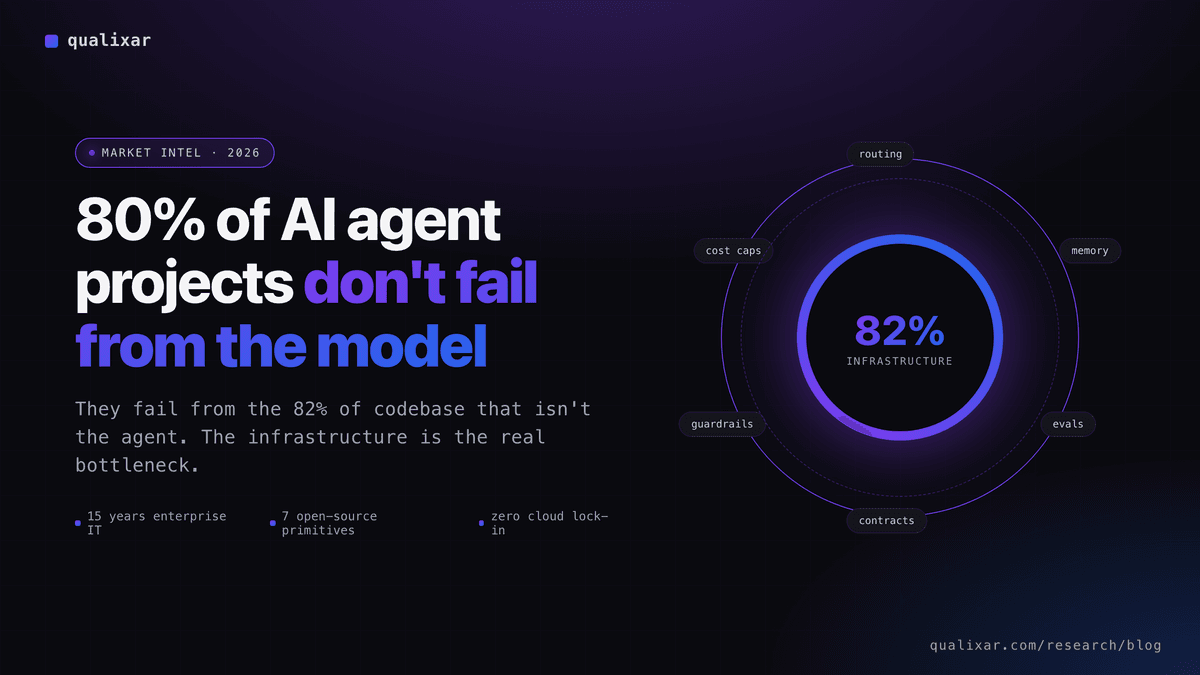
I Tracked Why AI Agent Projects Fail. 80% of the Time, It's Not the Agents.
Gartner says 40% of agentic AI projects will get cancelled. After 15 years in enterprise IT and building agent systems that actually shipped, I found the real bottleneck — and it has nothing to do with model intelligence.
How We Built It10 min read
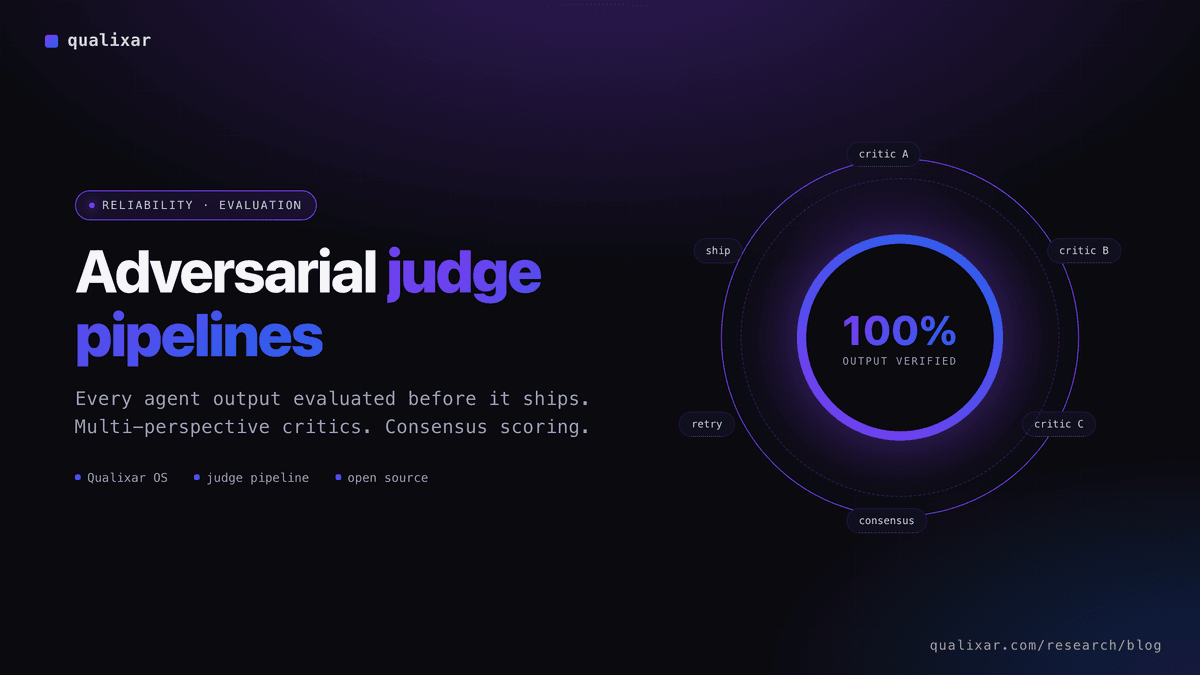
How Adversarial Judge Pipelines Make AI Agents Trustworthy
Most AI agent frameworks skip output quality entirely. We built a 2-round adversarial judge pipeline with multi-model consensus, anti-fabrication verification, and configurable profiles — and tested the same principle by having 7 independent AI auditors evaluate our own codebase.
How We Built It10 min read
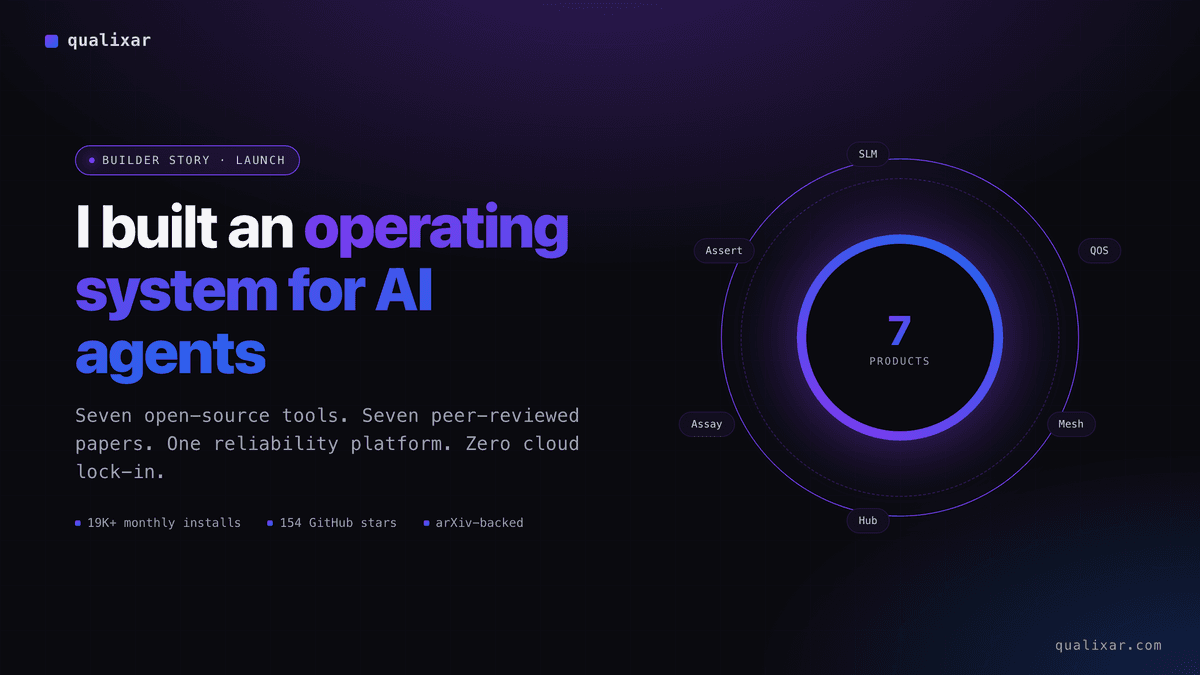
I Built an OS for AI Agents — Here's What I Learned
After 15 years as a solution architect and a catastrophic data loss that wiped my entire codebase, I rebuilt an agent runtime from scratch. 2,936 tests, 13 execution topologies, and a 7-agent adversarial audit later — here's the honest story.
How We Built It7 min read
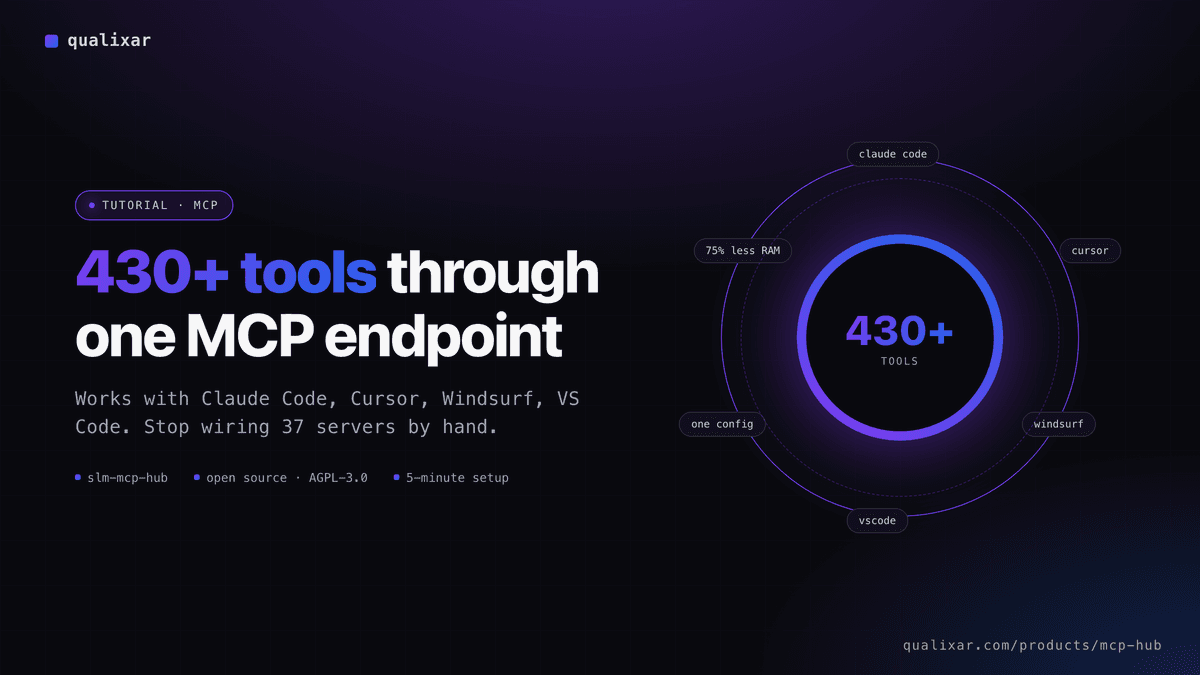
Run Multi-Agent Teams from Claude Code with Qualixar OS (25 MCP Tools)
Qualixar OS is an open-source agent orchestration runtime with 25 MCP tools. Drive the entire multi-agent system from Claude Code without touching a browser. This tutorial walks through connecting QOS as an MCP server and running a multi-agent code review team from your terminal.
How We Built It7 min read
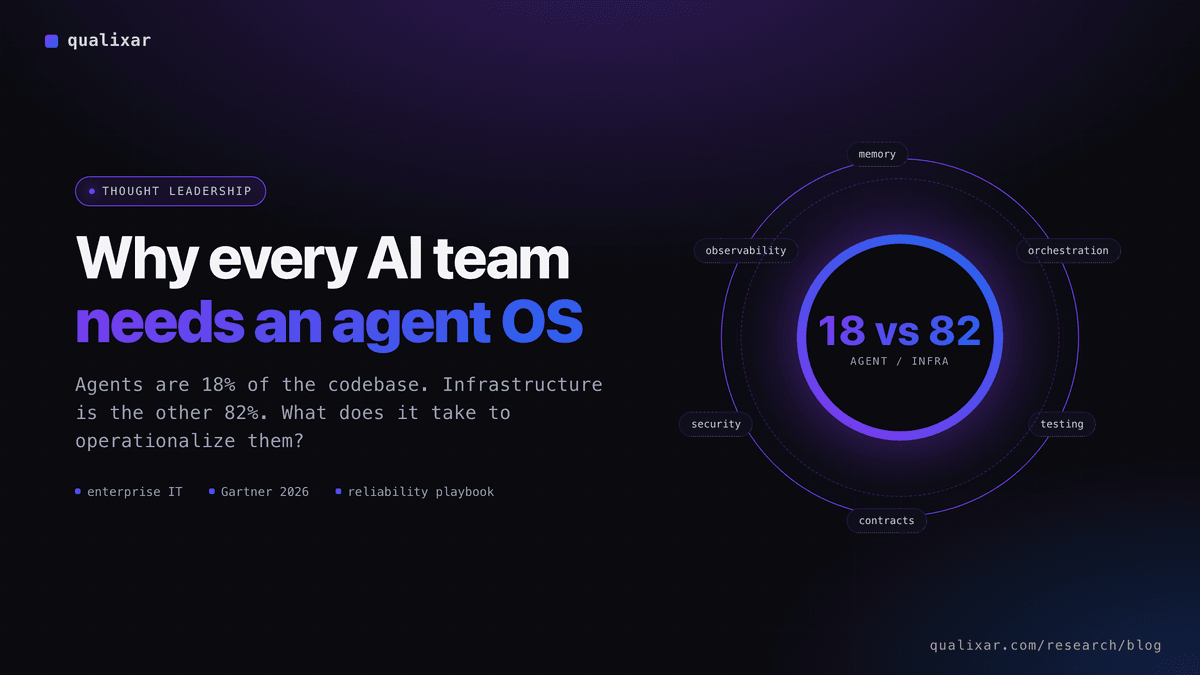
Why Every AI Team Needs an Agent OS
Frameworks give you agent components. But routing, quality, cost control, memory, and observability? You're on your own. It's time for an operating system layer.
How We Built It10 min read
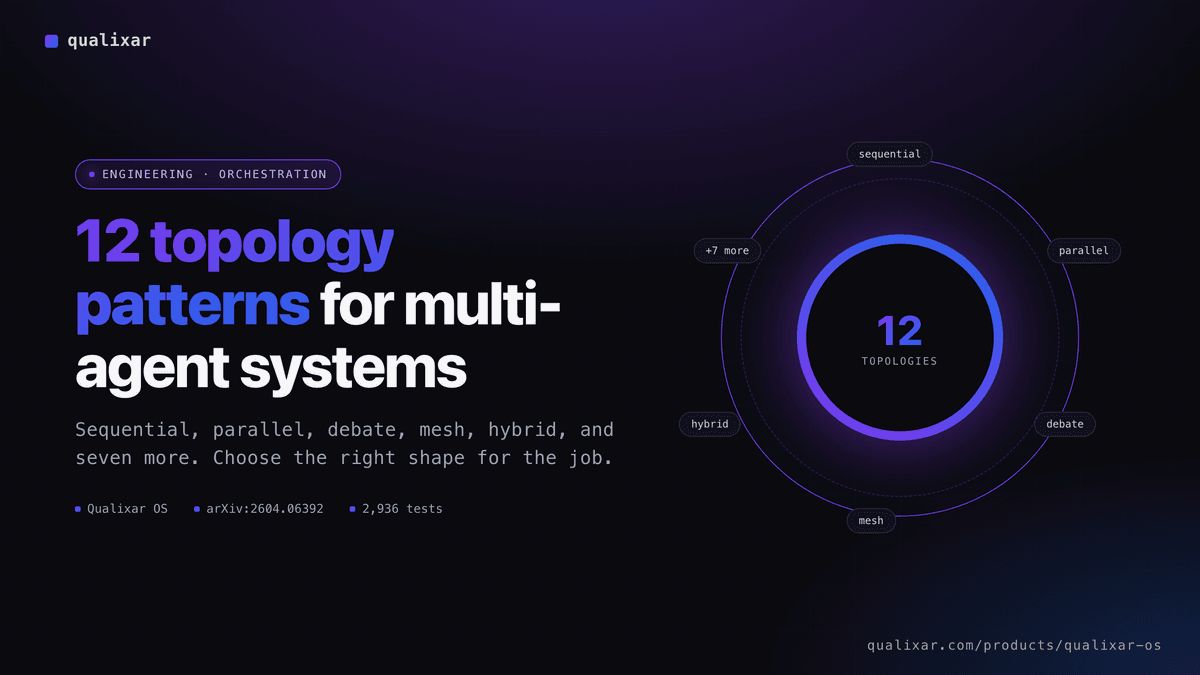
12 Topology Patterns for Multi-Agent Systems
Sequential, Parallel, Hierarchical, DAG, Debate, Mesh, Star, Grid, Forest, Circular, Mixture-of-Agents, Maker — when to use each, with ASCII diagrams.
What's Changing8 min read
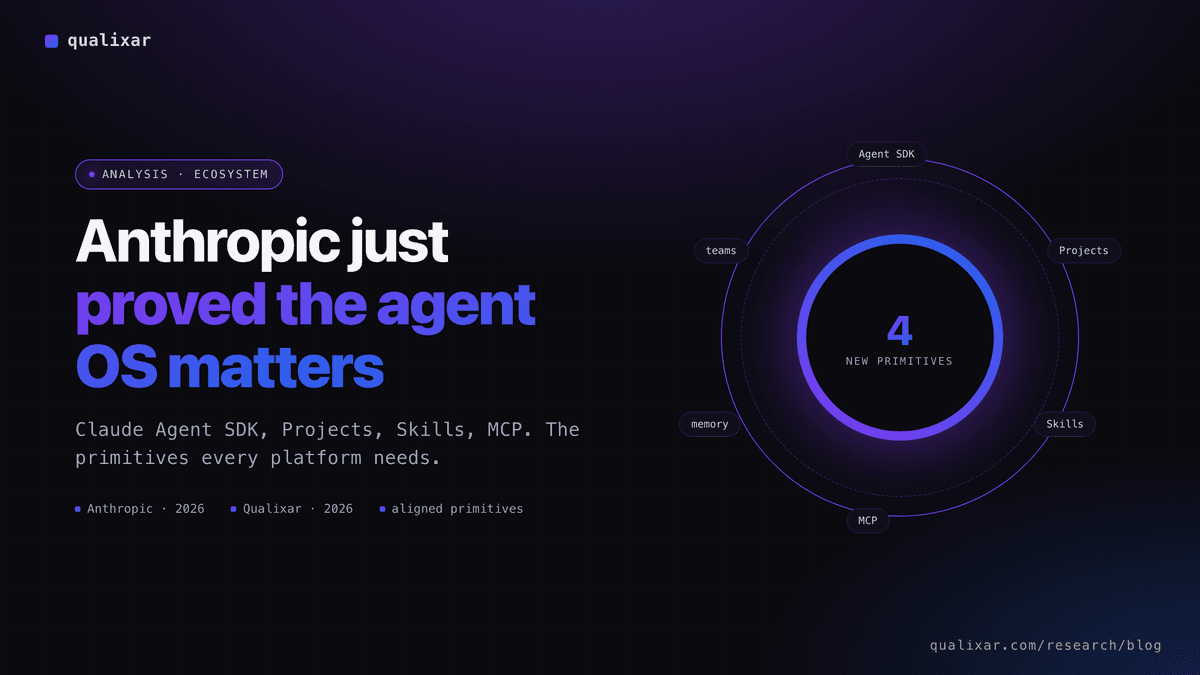
Anthropic Just Proved Why Agent Operating Systems Matter
Claude Managed Agents launched yesterday. Here's what it means — and why the open source alternative matters more than ever.
How We Built It7 min read
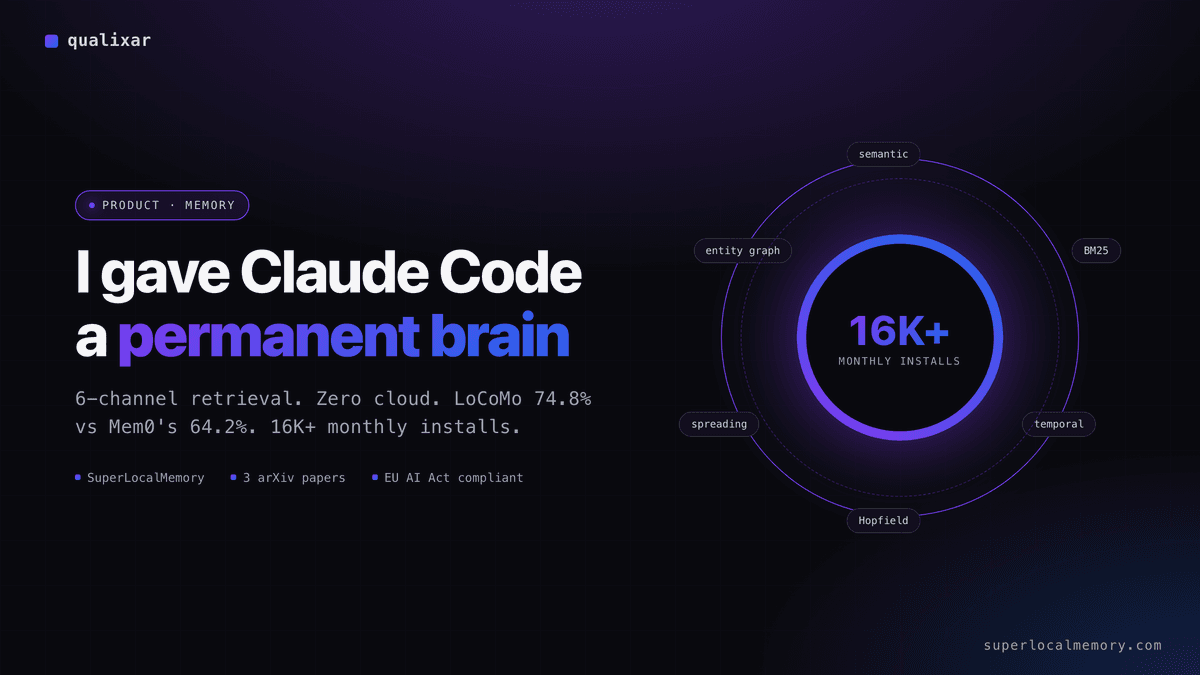
I Gave Claude Code a Permanent Brain — Free, Local, 60 Seconds
Your AI agent forgets everything between sessions. Here's how to fix that with one command — no cloud, no API keys, no cost.
How We Built It16 min read
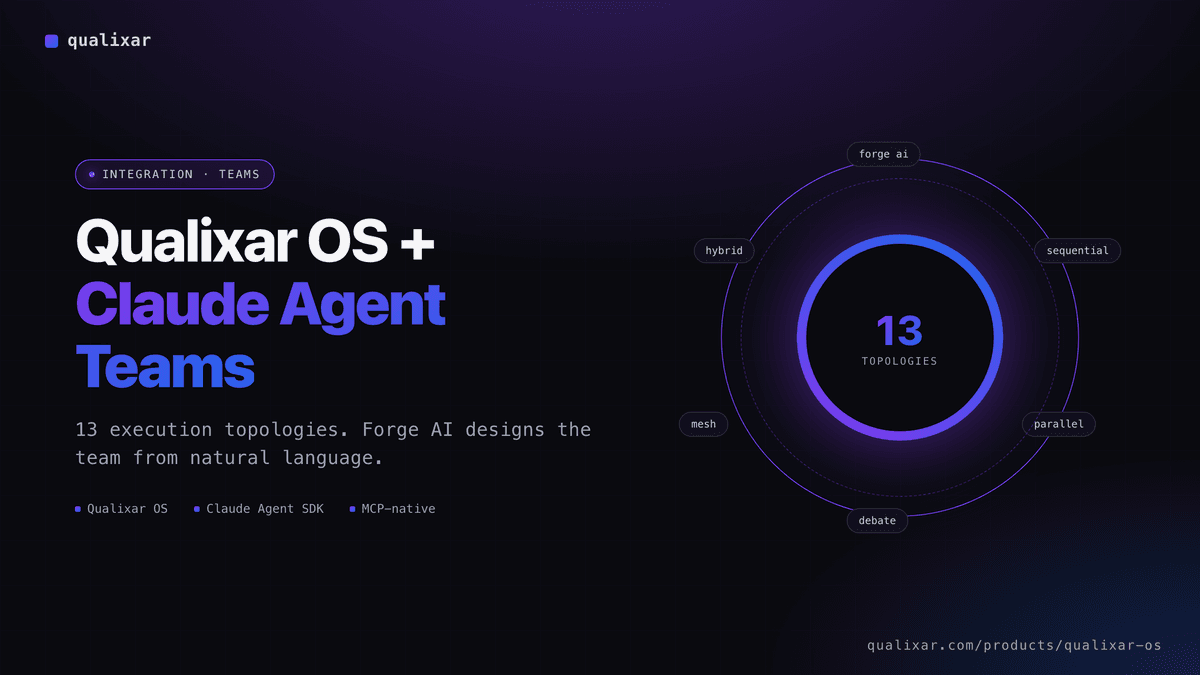
Hybrid Agent Teams: Qualixar OS Meets Claude Code
An architecture preview for integrating Qualixar OS with Claude Agent Teams and Managed Agents — subagent definitions, hybrid topology design, and the managed agents adapter pattern.
What's Changing4 min read
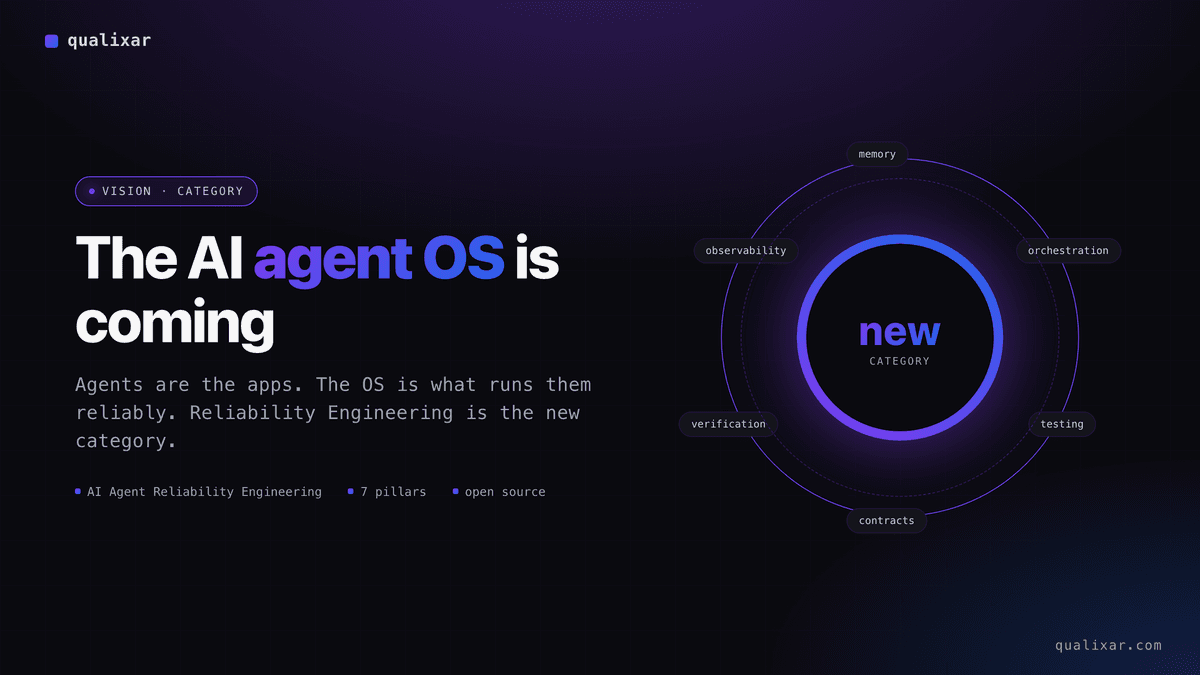
The AI Agent OS is Coming
40% of agentic AI projects get cancelled. The problem isn't the agents — it's the missing infrastructure layer beneath them.